
Letter to the Editors: The Frayheyt, not the Forverts!
 To the Editors:
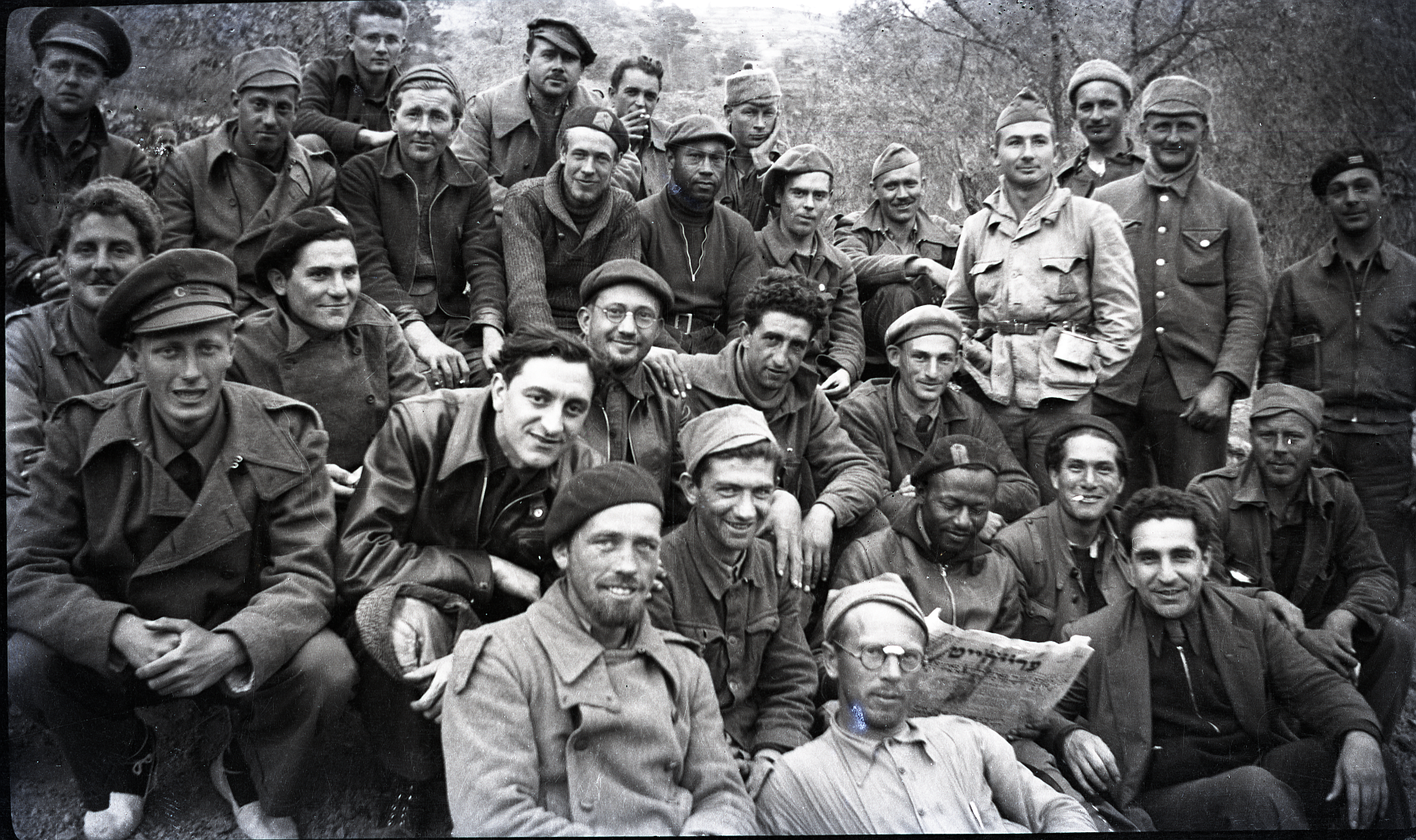
Sebastiaan Faber (The Volunteer, September 2026) has done a stunning job of placing in time what he rightly calls the “iconic” group photo of 29 volunteers that ALBA uses on its website and which I chose for the cover of my recent book, Salud y Shalom: Conversations with Jewish Veterans of the Abraham Lincoln Brigade (University of Illinois Press, 2026). The presence in the picture of three people, not strictly speaking members of the battalion, and the notes of Alvah Bessie, guide Sebastiaan to identify the time as the very end of April or the beginning of May 1938, hard times for the Internationals and the Republic, as he explains.
The fact that the three guests—John Little, Joe North, and Edwin Rolfe—as well as Alvah Bessie were all Jews certainly had something to do with my choice of the photo. The revision of names in the September Volunteer does not alter the fact that about one-third of the people in the picture are Jews—matching the percentage among American volunteers in Spain. The picture also includes a few of the people I interviewed in the early 1990s, such as George Watt and Hy Tabb. But it wasn’t simply the ethnicity of some, but rather the fellowship across ethnicities that caught my attention, including the image of a Black soldier who seems to be reading a Yiddish newspaper. Joe Taylor, lower right, is the only person whose eyes are not otherwise fixed on the camera.
Sebastiaan mistakenly identifies the newspaper as “The Forverts, New York’s leading progressive paper in Yiddish.” Taylor is holding the Communist Frayheyt (פֿרײַהײט), not the Forverts.
In Salud y Shalom Abe Smorodin—not in the picture—explains the difference between the two journals when he describes the devotion of his (Communist) parents to the Frayheyt (which he calls by its full name):
As a matter of fact, they were so ardent in their support that the struggle was not exactly a class struggle, so to speak; it was a struggle between the Morgn Frayheyt and the Yiddish Forverts. To my parents, the Forverts, which was the organ of the right-wing Social Democrats, was not only wrong politically, but it was a betrayer of the Yiddish language. They were polluting it with Americanisms, and if you wanted the true, classical, literary language, you would only find it in the Morgn Frayheyt.
Intricate, no? Talk about culture wars! In fact, the gap between these two organs of the immigrant culture played out in my own family. In 1930, the young woman who would become my mother entered an essay contest in an English language supplement of the Forverts. “I am a Jew and an American” was to be the topic. She lost the prize—$50—but her essay was printed, and she won a fan letter from the guy who would become my father. Two years and two thousand pages later, they were married in a rabbi’s office in Chicago. That was 1933.
At home, we nodded to the authority of Abe Cahan, a novelist and the long-time editor of the Forverts, who may have also been their matchmaker. But when my parents came to translate Sholom Aleichem, ten years later, it was the Morgn Frayheyt edition of SA’s Works that came with the subscription they had given to my grandfather in 1938. By then, they were in the Party and enthusiastic adherents of the Spanish Republic. Their first collection of stories by Sholom Aleichem, The Old Country, came out in 1946.
Result? Forverts plus Frayheyt equals at least one landmark of Jewish-American culture—and one humble pedant.
Joe Butwin
—Seattle, WA






