
Peter Carroll’s Papers, Processed and Catalogued, Are Now Open to Researchers
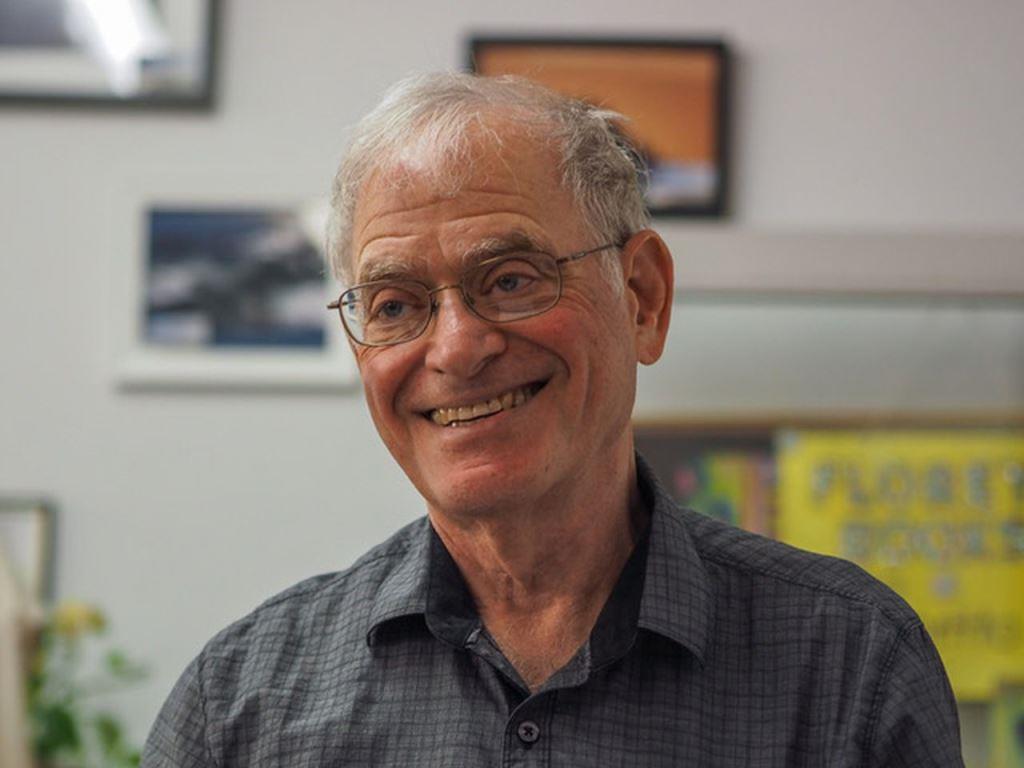
Peter Carroll. Photo Jeannette Ferrary.
In October, NYU’s Tamiment Library announced that the papers of Peter N. Carroll, who passed away in 2024, have been catalogued and are open to researchers. Peter Carroll, a historian and former ALBA Chair born in New York in 1943, spent more than fifty years interviewing, researching, and writing about the Lincoln Brigade. How does one process and catalog a life’s worth of work? We spoke with Shannon O’Neill, the curator for the Tamiment-Wagner collections, and processing archivist Rae Mahre. “It is a very intimate thing to witness and catalog somebody’s work.”
How do the Peter Carroll papers compare in size and scope to some of the other collections from researchers or authors within the ALBA Collection?
Shannon O’Neill (SON): What really strikes me about the ALBA collections produced by researchers and authors is that no matter the size of the individual collection—be it Peter’s, Frances Patai’s, Fredericka Martin’s, or Carl Geiser’s—they are all extremely rich in depth. And while there are certainly overlaps, each one has a distinct style that, seems to me, reflects the nature and approaches that each of these documentarians took. Peter’s collection strikes me as somewhat unique in that it’s a kind of meta-collection that allows us to witness Peter’s ever-expanding understanding and knowledge of the Lincoln Brigade and Spanish Civil War. He was absolutely tenacious in this pursuit. What also really stands out to me in Peter’s collection is you can observe his relationship with ALBA and the vets evolve—from a reverent curiosity to a deep commitment to this history and the people who lived it.
I see there are more than 30GB worth of computer files in the collection. Is that common these days?
Rae Mahre (RM): For collections that contain materials from the 1990s to the present day, computer files on optical discs, floppy disks, and hard drives are very common. In the Peter Carroll Papers, these born-digital materials consist mostly of scanned archival documents, digital photographs, and digital videos. In other collections, I’ve seen email correspondence, instant messages, website HTML files, and entire computer back-ups. To process these materials, we take a look at the files using a software program called Forensic ToolKit. Although this software is developed for the purpose of digital forensics, it serves archivists’ purposes well because it allows us to analyze data and determine its integrity without altering the content. Here, we can look at files across carriers, tag them, and filter them in various ways to analyze and arrange their content, all without altering the files on their original carriers. In the case of computer backups, we would only preserve files with research value—such as working files stored on the computer—and we would not preserve things like software applications, operating system files, or default backgrounds and fonts. Researcher access to files preserved from computer backups would look similar to files obtained from, for example, a floppy disk—the files would be isolated from the rest of the backup and arranged and described according to their content.

Shannon O’Neill
SON: To echo Rae, this is very common. As we increasingly only create documentation digitally, it will only become even more so. It’s kind of interesting to consider how the bulk of the ALBA collections are entirely analog, given the period in which they were created and the period that they document. Peter’s collection really sits at that nexus of the shift from the creation of records in analog formats to digital formats and makes me wonder what the future of collecting ALBA’s history will look like.
These materials were donated over almost 15 years’ time, from 2011 to 2025. Were they also processed gradually?
RM: No, they were processed in bulk in 2026. This is often the case, but not always. Sometimes if a collection contains many different donations over a span of several years, they may be processed individually rather than altogether. We never consider a collection to be “finished”—there may always be further edits due to additional information, digitization work, or donations to the collection. At NYU, as at many other large libraries and archives, we have a significant backlog of collections that are not yet processed. The collections get prioritized for processing based on many different factors, including research value, physical condition of the materials, or grant funding.
The finding aid says that “18 commercial, duplicate, or corrupted born-digital carriers were deaccessioned.” Do we know what those might have contained?
RM: In this case, the corrupted born-digital carriers were indeed two floppy disks. Floppy disks are a fragile format, and recovering their data can be complicated because the way they are encoded depends on what operating system was used (e.g., Windows 95). Thankfully, we believe these two floppy disks duplicated paper materials in the collection; based on their labels and original arrangement, one likely contained finding aids from Russian Archives, found in Series II. B, and one likely contained a submission to The Volunteer, found in Series I. The other 16 born-digital carriers that were deaccessioned contained duplicate or commercial content. This collection contained many commercial recordings on the Abraham Lincoln Brigade collected by Carroll. While we do not have the legal rights to serve these materials to researchers, they are available through other means, often found online or in a library’s circulating collections.
I imagine that there’s a way in which the content of a collection like this, but also its sheer organization, or lack thereof, ends up drawing a portrait of the human being responsible for it. What does Peter look like to a processing archivist?
RM: I love this question. It is a very intimate thing to witness and catalog somebody’s work in this way. Peter comes across as someone who was very dedicated to his work. His research notes are very thorough, meticulously labeled, and mostly handwritten. (The labels made my job a lot easier!) I was struck by how much oral history work Peter did in the writing of his book The Odyssey of the Abraham Lincoln Brigade. This is someone who developed relationships in every part of his work. His place in his community can be seen not only through the roles he held and the events he participated in, but also in the effort he took to represent people’s stories with intention. This was also my first time processing an ALBA collection, and I very much enjoyed learning about the Veterans of the Abraham Lincoln Brigade. They strike me as a group with a lot of integrity and also a great sense of humor.
SON: Rae’s response is really moving to me. It defines Peter, as I got to know him, perfectly. I don’t have the honor of saying that I knew Peter well, but the ways that I did know him made me admire him immensely. I will say that Peter’s collection really makes me wish that I had had more time with him, but I’m so grateful for his papers because they demonstrate his intellect, his labor, his ethics, and his relationships. In this way, I think we’ll all get to keep knowing Peter and knowing more about Peter. And that is a real gift.
Sebastiaan Faber, a longtime ALBA board member, teaches at Oberlin College.






