
Kitchen Table History: Contending with My Family’s Radical Past
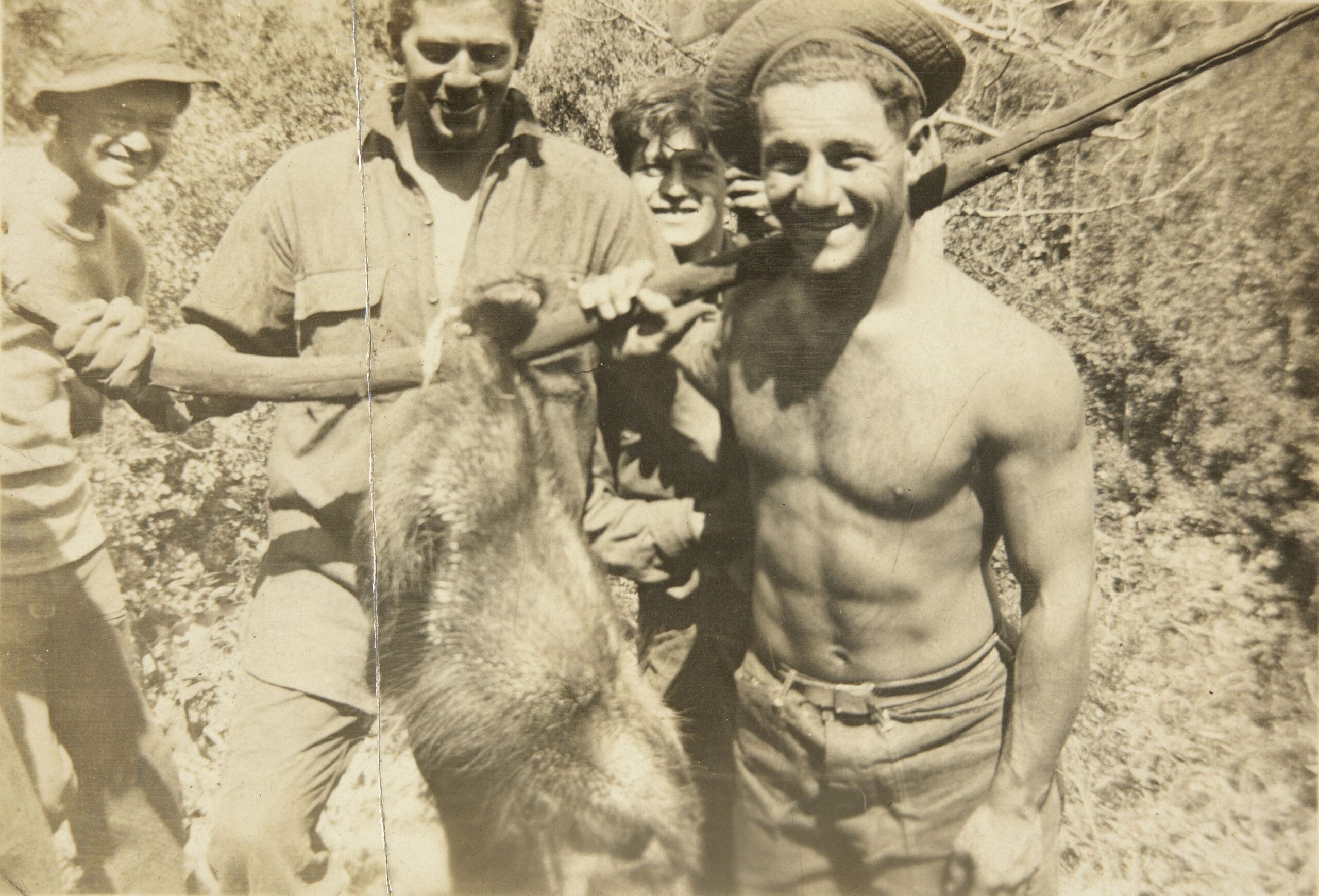
Joe Gordon at CCC camp, 1933. Courtesy Czitrom family.
In his forthcoming historical memoir, ALBA’s chair emeritus Daniel Czitrom explores how family memories and political beliefs through three generations shaped his life and his identity as a historian. An excerpt from the chapter “Three Roads to Spain.”
I was nervous as hell for my first oral book report. I was barely fourteen, a sophomore at Bronx High School of Science. The book was Allen Guttmann’s The Wound in the Heart, a 1962 history of America and the Spanish Civil War. Rather than summarizing Guttmann’s analysis, I focused instead on what I saw as the enduring moral question: Why had the United States, Great Britain, and France stood idly by while General Francisco Franco’s Fascist forces, aided and abetted by Germany and Italy, destroyed the Spanish Republic? I hammered away at what I considered the obvious hypocrisy and cowardice of the Western democracies. My passion failed to stir my classmates, who, in early 1965, were more wrapped up in the Beatles and the rest of the British pop invasion. I dug the Beatles too, but I was determined to share my growing preoccupation with the Spanish Civil War.
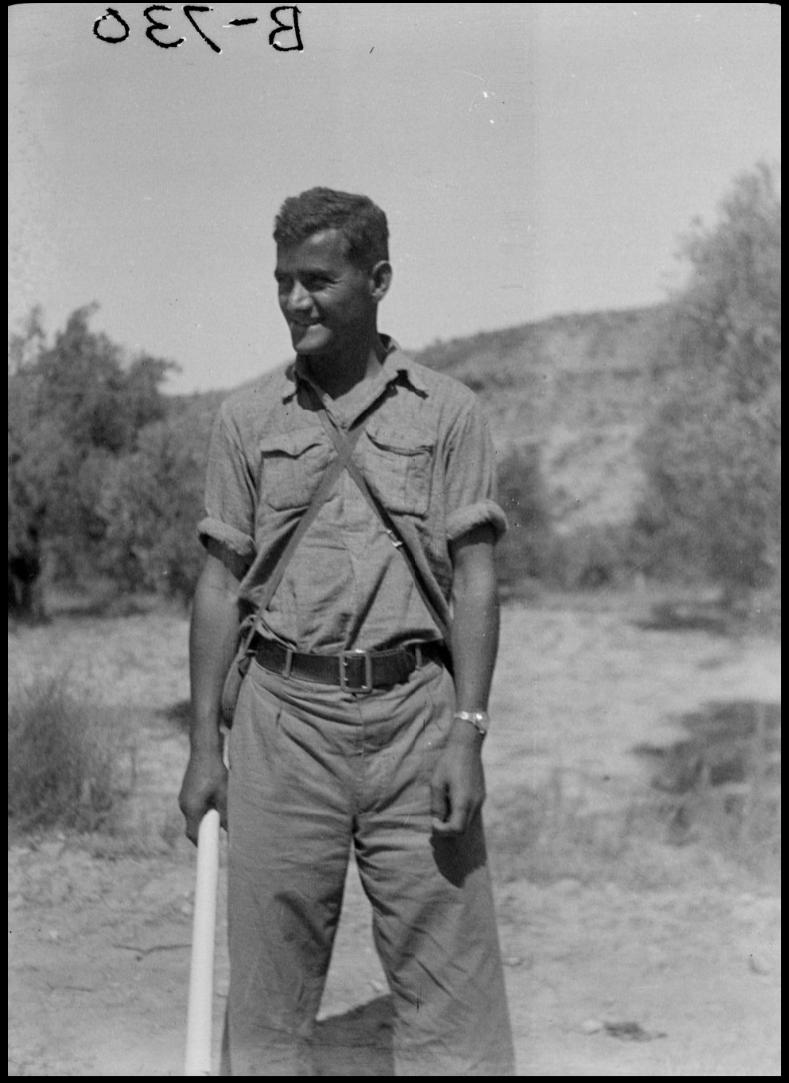
Ben Barsky in Spain, Aug. 1938. Tamiment Library, ALBA.Photo.011 #B730.
Was there any other possible topic? Spain had always been there, hovering over my family like a permanent storm cloud. It was the beginning or end of countless political arguments over the meaning and import of the Spanish Civil War, quarrels that got even more heated when some family members started traveling to Spain in the 1960s, while Franco still ruled. Three family members had volunteered to fight with the International Brigades in 1936–37, and two never returned. They were among the roughly 2,800 American men and women who had stepped forward to stop the spread of fascism, part of the global wave of roughly 40,000 international volunteers who streamed to Spain. Two were brothers, Joe and Leo Mendelowitz, known by their nom de guerre Gordon, my father’s first cousins who were very close to his family. The third was my mother’s older brother, Ben Barsky. The extensive literature on Americans in Spain included many references to the Gordons. By contrast, Ben Barsky was just another anonymous casualty of a brutal war that routinely used raw, untrained, ideologically committed volunteers as shock troops who suffered devastating losses. In fact, it was not until thirty years after the Spanish Civil War that my family discovered what had happened to Ben. Starting with that tenth-grade book report, I began a halting process of discovery, a decades-long effort to learn not only the whys and hows of these volunteers but also to form a better sense of them as people. The Spanish Civil War produced (and continues to produce) historical writings deeply inflected by ideology and the settling of old scores; memoirs and personal accounts based on fading memories; and the collapse of the Soviet Union and the opening of archives long shut to researchers. I was more after the human angle of what it meant to go to Spain—for both the volunteers and their families. What was the flip side of the courage, the idealism, the belief in a cause? It was the mixture of shock, confusion, anger, and later grief felt by family members trying to make sense of it all. Volunteers made decisions and choices amid real uncertainty about how things would turn out, tangled up always in family relationships and obligations. I grew up learning about these three men over the kitchen table, but I got very little sense of them as people. I wanted to understand them beyond their ideological commitments and as more fully human—their reasons for going, its effect on them and their families, and what they did in Spain.
The Spanish crisis had a global urgency, and the volunteers shared a powerful desire to fight Fascism. That desire had been nurtured in the more immediate and intimate milieu of family, neighborhood, trade unions, and schools. There were (sometimes tragic) tensions between radical political action and the demands of family life. I grasped all this in the abstract. But how could I learn more about the character, lived lives, and experiences of these three family members?
As a boy I had heard about my father’s two cousins, the brothers Leo and Joe Gordon, from him and other family members who knew them. I read about their time in Spain in two of the earliest accounts of Americans in Spain we had in the house, Edwin Rolfe’s The Lincoln Battalion (1939) and Steve Nelson’s 1953 memoir, The Volunteers. My dad had saved a few yellowed clippings from the Daily Worker, where accounts of Joe’s heroism on the battlefield made him a legendary, if elusive, figure in my eyes. Joe seemed an especially compelling character: a genuine tough guy, a championship middleweight boxer in the US Army who deserted to go to Spain in late 1936.
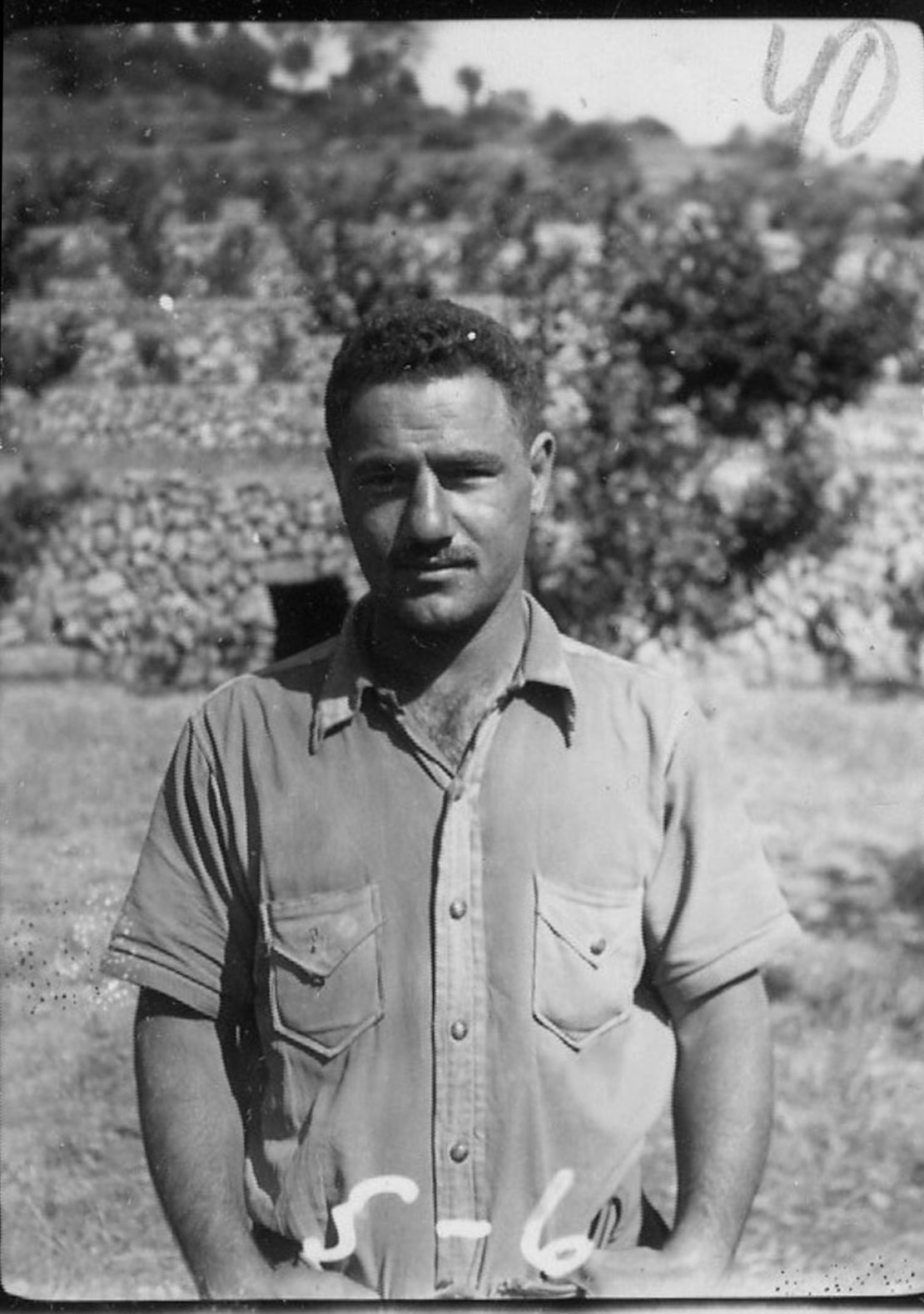
Joe (Mendelowitiz) Gordon in Spain. RGASPI F.545, op.6, d.901.
The Gordons were well-known figures compared to Ben Barsky, who was a total cipher for me. The first breakthrough came in 1968. I was a college freshman, home on vacation, browsing in a Bronx bookstore. I came upon a copy of Arthur H. Landis’ newly published book The Abraham Lincoln Brigade, a pioneering work of history and the first comprehensive account of the American volunteers in Spain. A brief index item took my breath away: Barsky, Ben, death, 543. A diary entry by a nineteen-year-old soldier provided a brief eyewitness account of his death. Here, after three decades, was a partial account of what happened to Ben Barsky. However, it raised more questions than it answered. Why and how did Ben go to Spain? Why had the family never received any notice of his death from the US government or anyone else? And, perhaps most importantly and painfully, why had Ben’s life and sacrifice been such a taboo subject in the family for so many years? Ben’s older sister, Esther, an active Communist in the 1930s, carried lifelong guilt over encouraging him to volunteer. However, she would never discuss her feelings. Nor would my mother, Betty, who was sixteen when Ben went to Spain. She recalled receiving beautiful letters he had written home, but no one knew what had happened to them. All anyone knew for sure was that he had never come back from Spain and that the family had never received any sort of confirmation, official or otherwise, as to his fate.
The three family members who went to Spain embodied the two main strains of Depression-era Jewish radicals: working-class activists and intellectual idealists. The Gordons were working class in origin and political perspective, having labored in salami factories, fur shops, tuna canneries, road construction, and woolen mills. They were dedicated Communists, as was Ben Barsky. Ben went to Spain while he was a student at CCNY, where he had immersed himself in Communist Party activism and the bitter sectarian debates on campus. Ben was well-read and thoughtful, “a pure soul,” as a friend recalled, and he had ambitions to be a teacher. Thus, for my father and his sisters, Joe and Leo Gordon embodied the ultimate in courage and sacrifice for the revolutionary cause. For my mother’s family, Ben Barsky’s political work had been largely hidden, and it remained shrouded in silence. I was frustrated by the limits of what I could learn over the kitchen table.
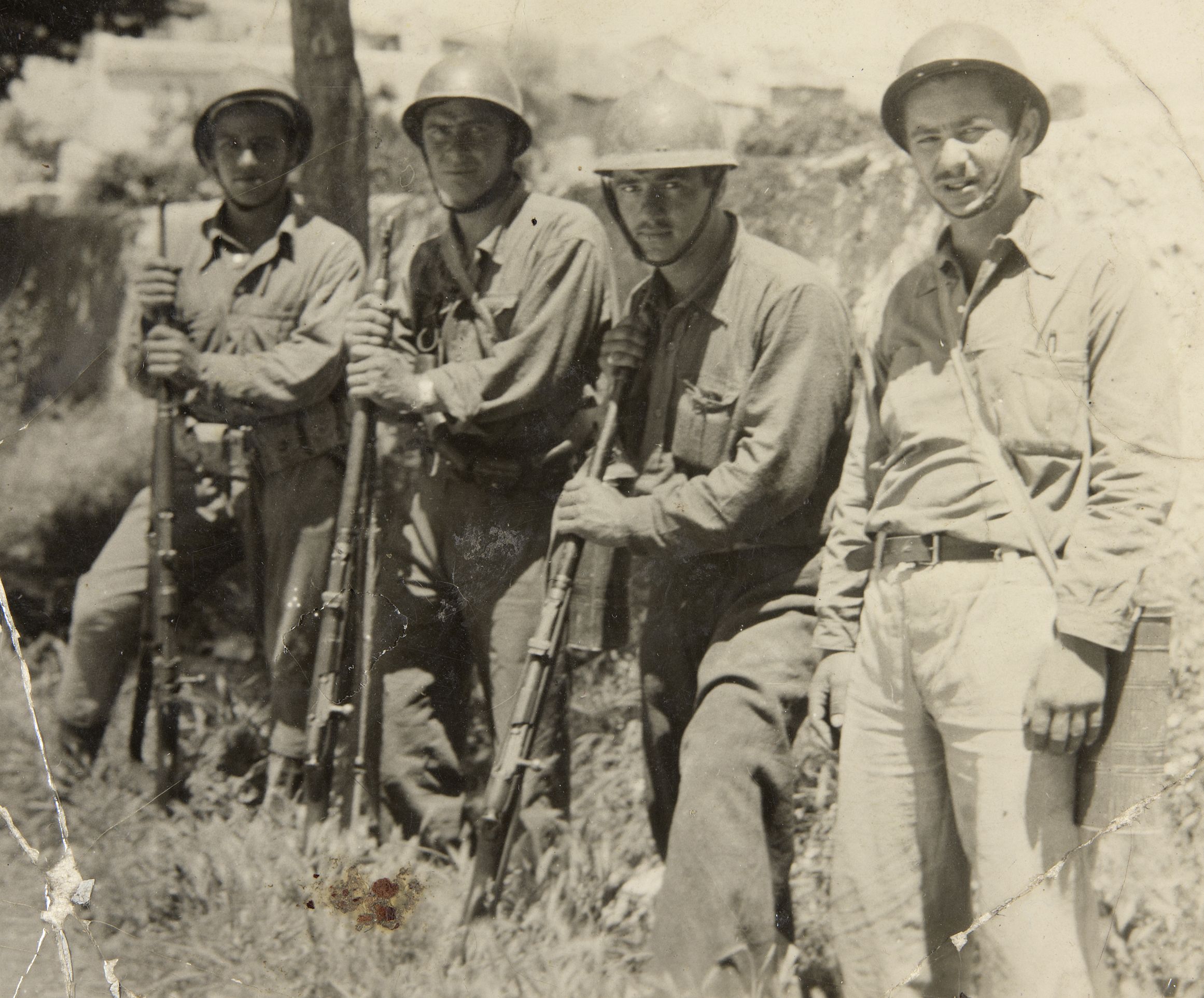
Jarama, 1937: Eli Begelman, Joe Gordon, Hy Stone, unknown. Courtesy Czitrom family.
“Men went to Spain for various reasons,” Alvah Bessie wrote in his essential 1939 memoir, Men in Battle: A Story of Americans in Spain, “but behind almost every man I met there was a common restlessness, a loneliness. In action these men would fight like devils, with the desperation of an ironbound conscience; in private conversation there was something else again.” Bessie’s book remains the best account of the trench-level, human experiences of American volunteers in Spain. Novelist, journalist, and later successful screenwriter before getting blacklisted as one of the Hollywood Ten, Bessie survived the Ebro campaign. He included his own thoughts on the profound question of what motivated the volunteers to put their lives on the line against such long odds. “These men behind these fragile rocks,” he wrote, “these men whose tender flesh is torn to pieces by the hot and ragged steel; they could not accept their death with such good grace if they did not love so deeply and so well—were not determined that love must come alive into the world. What other reason could there be for dying?”
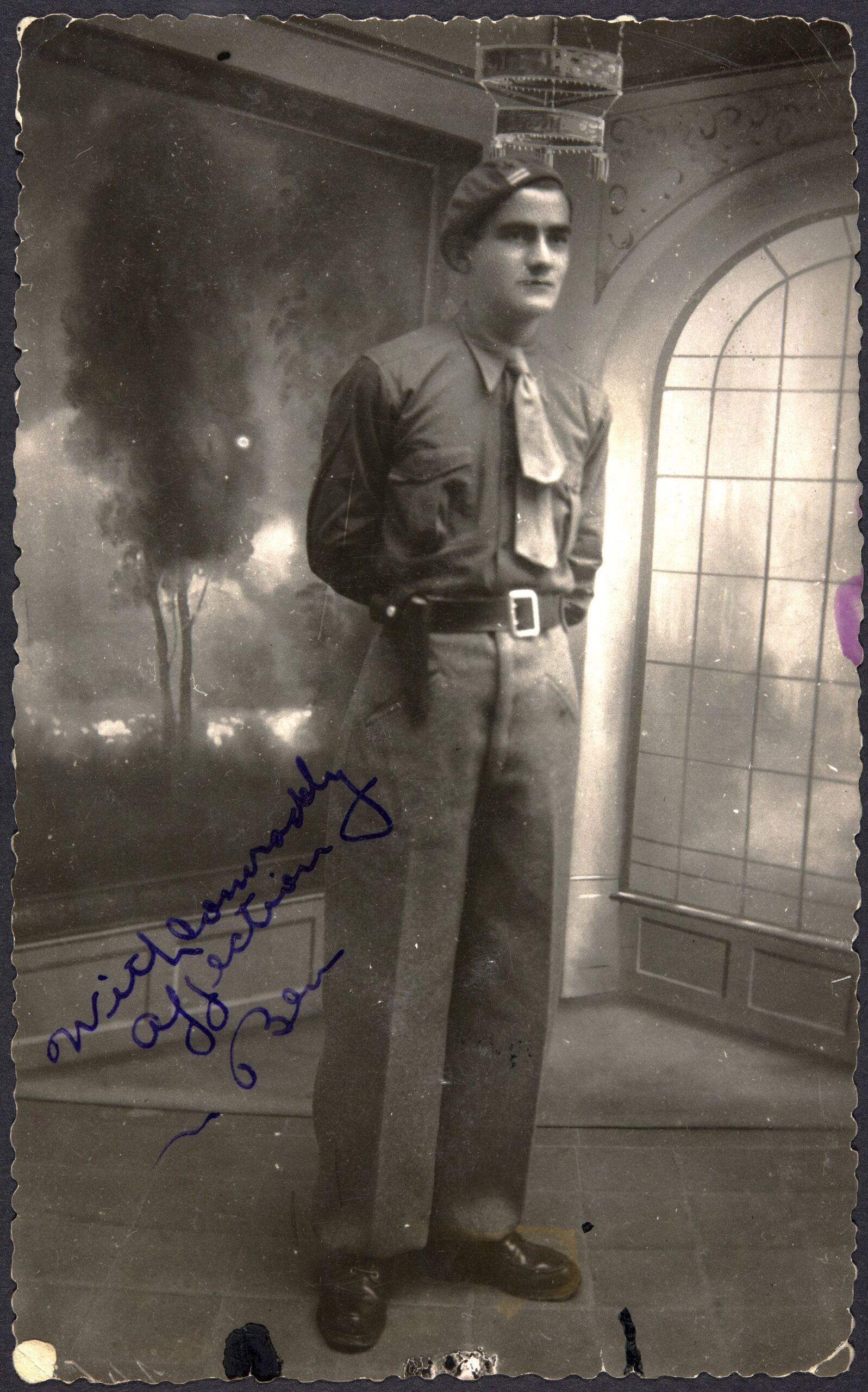
Ben Barsky in Spain, Dec. 1937. Courtesy Czitrom family.
Yet I learned that there was more to it than just love. There was also the abandonment of love (Leo leaving behind his pregnant girlfriend Agnes), parental love disregarded (Ben secretly departing from his bewildered mother and father), and deep anger transmuted into love of a cause (Joe, surviving wounds at Jarama and Brunete, and then going down with his torpedoed Merchant Marine ship in 1943). These men saw themselves as revolutionaries, a disciplined cadre for whom politics was life and death. Nonetheless, the “rank-and-file tendencies” that troubled Joe Gordon’s superiors could never be entirely stamped out, and outrage at incompetent leadership ran like an electric current through the trenches. Volunteers did not go to Spain because Joseph Stalin told them to; they went because it seemed the only logical step for confronting the Fascist tide in the world. They lost the battle in Spain, but they won the war against fascism by 1945. And they were right that Fascism could only be stopped by the force of arms. Yet their stories transcend ideology. Their political commitment, heroism, and sacrifice coexisted with the emotional toll taken on family—a mother who could never understand why her eldest son went to Spain, leaving her bitter for the rest of her life; a pregnant girlfriend left behind to wonder why and what might have been; and the lingering confusion and desperation over the volunteers’ fates. Nor could idealism overcome disastrous military leadership, political cynicism, or the inevitable chaotic mishaps of war. Nearly a century after those terrible days, when family members faced death in the trenches and hills of Spain, I’ve come to understand how their complex, real-life tangles should never be separated from appreciating their bravery and courage.
From Kitchen Table History: Contending with My Family’s Radical Past. Copyright 2027 by the Board of Trustees of the University of Illinois. Used with permission of the University of Illinois Press. Daniel Czitrom is an Emeritus Chair of the ALBA Board of Governors. He can be reached at dczitrom@mtholyoke.edu.






