
Intimate History: Leonardo Padura on the Spanish Civil War
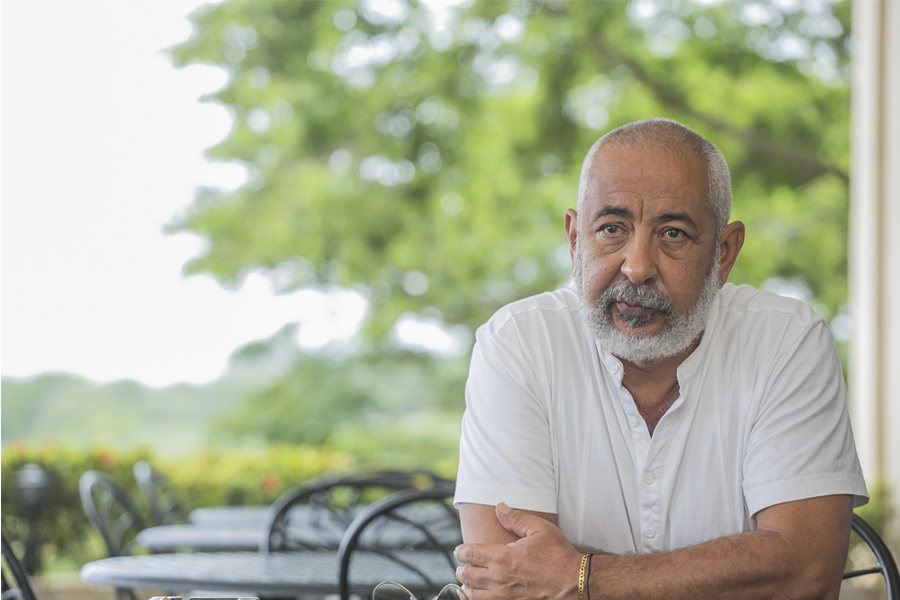
Leonardo Padura in 2017. Photo Jorge Mejía Peralta. CC BY 2.0.
The Spanish Civil War features centrally in The Transparency of Time, the ninth Mario Conde novel by the bestselling Cuban author Leonardo Padura, which reaches across seven centuries of violence, displacement, and survival.
First published in 2018 and translated three years later, Leonardo Padura’s The Transparency of Time shows how wars, migrations, political disappointments, and inherited memories continue to shape lives long after the dust has supposedly settled. The ninth novel in the series featuring detective Mario Conde, Transparency is what Padura himself has called a novela crepuscular, a novel set at dusk. Conde is approaching sixty. Years of disappointment have left him skeptical and melancholic but also increasingly attentive to the passage of time and to what remains after political hopes fade. Although the novel begins as a detective story—Conde and his friends search for a Black Madonna, resembling Cuba’s Virgin of Regla, stolen from his old friend, the art dealer Roberto Roque Rosell, known as Bobby—the search soon opens onto a more complicated account of war, migration, faith, and historical inheritance.
That story reaches across seven centuries through three Catalan men, all named Antoni Barral. Each finds himself caught in a defining conflict: the Crusades and the fall of Saint John of Acre in 1291, the Catalan Civil War of 1472, and the Spanish Civil War of 1936. Their lives are linked by an eleventh-century Romanesque Black Madonna carried from the Holy Land to Catalonia during the Crusades. Passed from one historical catastrophe to another, the sculpture becomes more than a religious artifact. It bears the traces of movement across borders and generations, connecting people who have little power over the events that determine their lives.
In this historical continuum, the Spanish Civil War plays a central role. Padura does not treat the war as a self-contained Spanish conflict. Instead, he places it within a longer history of violence, displacement, belief, and survival, and then follows one of its displaced subjects across the Atlantic. The war entered ordinary lives, uprooted people from places they had scarcely imagined leaving, and carried its consequences into other countries and other histories.
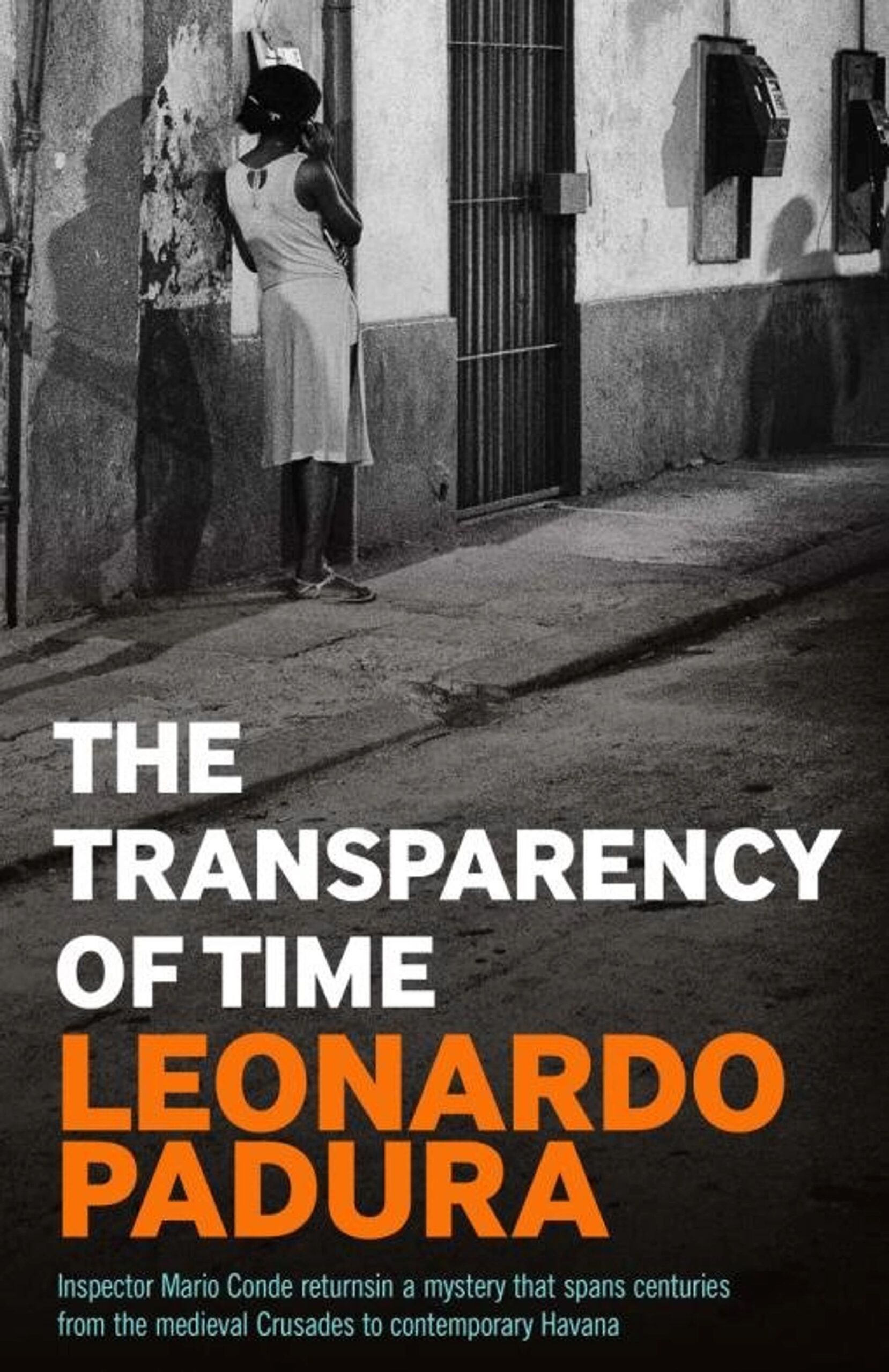 In 1936, readers meet the youngest Antoni Barral, who is living with his father, Carles Barral, in the mountains near Camprodon, in the Vall de Sant Jaume of the Alta Garrotxa. Antoni is a Catalan peasant, a pagès shaped by an agrarian world of poverty, uncertainty, and hardship that seems far removed from the great events of history. In the hermitage of his village stands a black Romanesque Virgin, believed to have reached Catalonia during the Crusades and invested with profound spiritual meaning for the community. As the military coup against the democratically elected Second Republic reaches even this isolated corner of Catalonia, families that had shared the routines of rural life find themselves on opposing sides. War violently ruptures a world that had seemed governed by other rhythms.
During the first sacking of the village, Antoni kills in order to save the Virgin, marking a decisive break in his life. Violence forces the pagès to recognize that the movements of History are no longer distant from him: they have entered his village, his home, and his own actions. He eventually leaves Catalonia as a stowaway aboard the Saint Martin, bound for an unknown island called Cuba and a city called Havana, where, as the village’s dissident priest has told him, anything good or bad might happen. What begins as the history of a remote Catalan village thus becomes a story of wartime displacement across the Atlantic.
Padura’s choice of Havana is crucial. The seemingly miraculous city in which Antoni encounters another Black Virgin—the Virgin of Regla, one that, like his own, carries the scent of the sea—is itself traversed by histories moving across the Atlantic. Arriving in 1936, Antoni enters a Cuba still marked by the fall of Gerardo Machado, decades of U.S. intervention, and the growing political power of the military under Fulgencio Batista. At the same time, Havana had become a center of internationalist support for the Spanish Republic and the antifascist struggle in the very war from which Antoni had fled. The crisis of the Cuban Republic and the Spanish Civil War therefore meet within a single urban space and, more intimately, within the trajectory of a single migrant.
This transatlantic movement complicates any simple understanding of exile as departure from one history and arrival in another. Antoni leaves the Spanish Civil War behind—but history accompanies him: Havana is another place where political struggles, migrations, memories, and solidarities converge. Padura’s Cuba becomes part of the history of the Spanish war, just as Antoni’s displacement becomes part of a longer Cuban history of arrivals, departures, and transatlantic attachments.
The story of Mario Conde, set in the present, gives this history another resonance. Conde and his friends belong to a Cuban generation whose expectations have steadily eroded. The ideals that once promised a different future have given way to economic hardship, inequality, and uncertainty. Their friendship becomes one of the few forms of continuity available to them. That solidarity is tested when their friend El Conejo decides to leave Cuba for Miami. Across a very different political and historical context, his departure recalls the recurring experience of having to abandon one’s country. Rather than equating Spain in the 1930s with contemporary Cuba, Padura places different histories of departure beside one another, while exile and migration emerge as experiences through which large political transformations enter private lives.
Antoni Barral is central to this vision because he represents precisely the kind of person who rarely gets to write his own history. In Ronald Fraser’s formulation from Las dos guerras de España, such lives register the contradictions of history’s long and impersonal movements. Padura’s peasant does not command armies, lead parties, or determine the course of the war. History happens around him and to him, yet it is through his body, his possessions, his losses, and his movements that the consequences of war become tangible.
The peasant from the Vall de Sant Jaume who arrives in Cuba aboard the Saint Martin dies in Havana in 1989. At the threshold of death, the Black Romanesque Virgin remains a silent witness to the weight of history upon his life. Yet precisely as the material world recedes, Padura returns Antoni to the most elemental material trace of his journey: his feet.
In 1936, after fourteen days hidden in the hold of the Saint Martin, Antoni finds his worn espadrilles and looks down: “Once again, they were on their way.” More than five decades later, his deformed and useless feet condense the paths his life had taken, whether “chosen or imposed,” from Camprodon and the Vall de Sant Jaume to Cuba. With them he had passed “from innocence to guilt, from ignorance to knowledge, from peace to death.” The body becomes an archive of displacement. Antoni’s feet preserve the material traces of a life transformed by war, migration, and circumstances he could never control.
The Black Virgin does similar work. Carried across seas and centuries, protected during war, and eventually transported to Cuba, the object survives the people and conflicts that surround it. Its meaning changes as it moves, but it continues to bind together histories that conventional national narratives tend to separate. The Crusades, Catalonia, the Spanish Civil War, and Cuba become connected not through an abstract claim about historical continuity but through the movement of a material object and the lives attached to it.
This is where Padura’s novel speaks most powerfully to the history of the Spanish Civil War and its aftermath. War is not only a sequence of battles, political decisions, military campaigns, victories, and defeats. It is also a transformation of more intimate worlds: a village divided, a sacred object threatened, a pair of worn espadrilles, a young man hidden in the hold of a ship, and a body that decades later still bears the traces of the journey.
Antoni Barral’s apparently marginal life is historically significant precisely because he does not make history in the conventional sense. He cannot determine its course. But history passes through him and leaves its marks. His trajectory from the Alta Garrotxa to Havana brings together the Spanish Civil War, migration, the troubled Cuban Republic, and the centuries-spanning movement of people and beliefs across the Atlantic. Padura reminds us that the great upheavals of the twentieth century were also intimate events, lived by ordinary people who crossed borders, endured violence, carried objects and memories with them, and remade their lives in places they could never have imagined reaching.
Jennifer Duprey, an associate professor at Rutgers University, works on the literature, history, and culture of the modern and contemporary Iberian Peninsula.






