
Radical Pacific Northwest: The Washington State Left & the Spanish Civil War
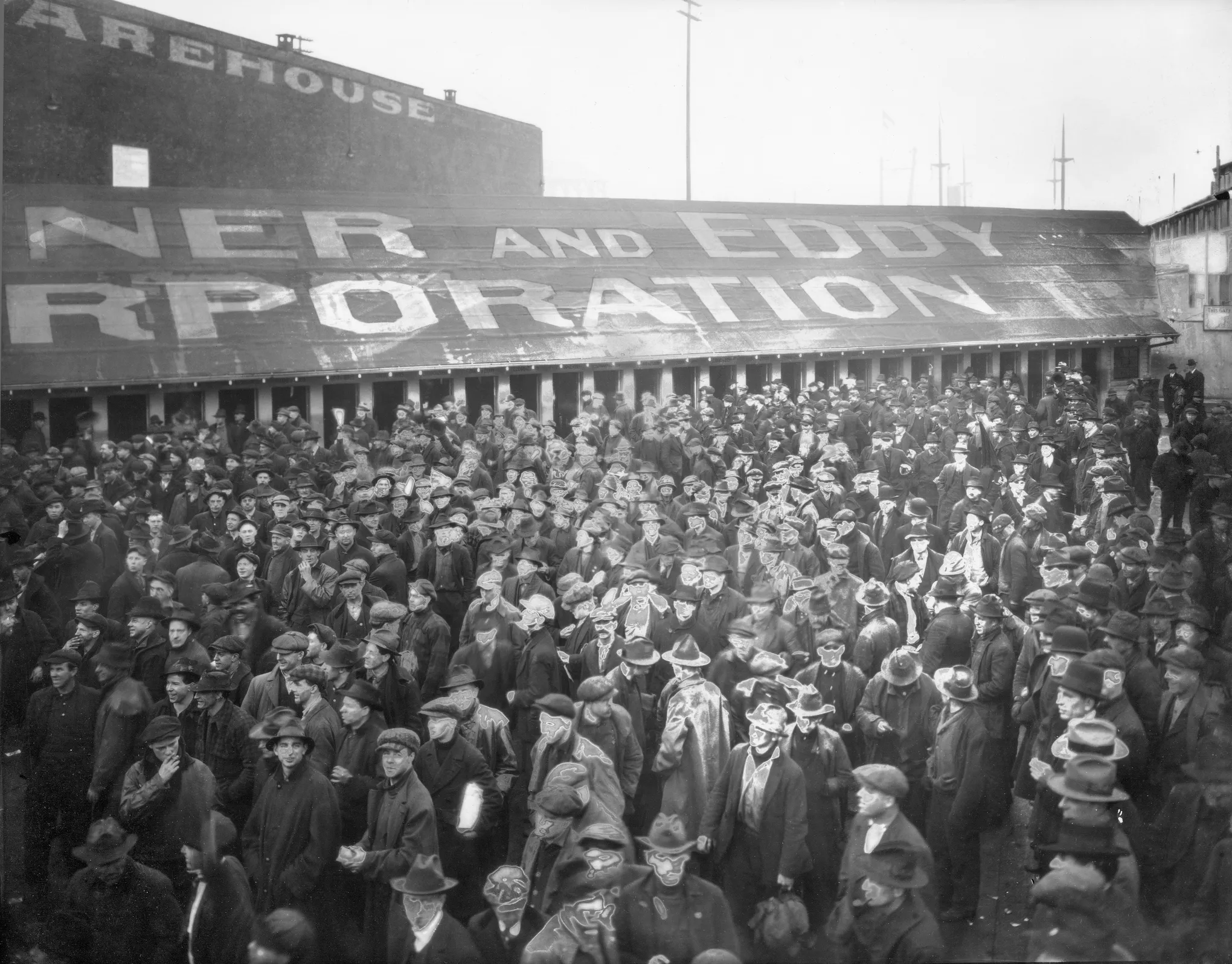
Striking shipyard workers leaving the Skinner & Eddy Corporation yards during the historic Seattle General Strike in February 1919.
Few Americans know how integral Seattle has been to radical movements of the 20th century. In fact, it was Seattle-based Lincoln vets who played an important role in the installation of the first US monument to the International Brigades.
The very first public monument to the International Brigades that was dedicated in the United States is not in New York, or Chicago, or San Francisco, but Seattle. What might seem unlikely to some makes perfect sense to a Washingtonian like me. (And no, I don’t mean Washington D.C.)
Outside of Washington State, few Americans know how integral Seattle has been to radical movements of the 20th century. From the Seattle General Strike of 1919 to the first Black Panther Party chapter outside of California to the internationally renowned protests against the World Trade Organization, Seattle has been a hotbed of political action.
Naturally, Seattle would not be Seattle if it did not produce some of its own Spanish Civil War volunteers (or brigadistas). In the 1980s and 1990s, Seattle-based Lincoln vets played an important role in the installation of the monument to the Brigades. Erected in 1998, it stands near the University of Washington’s student union building, which happens to be about eight miles from my childhood home.
Even though I was born and raised in Washington, it wasn’t until I moved east to attend Wellesley College that I first heard about my state’s deep ties to the Abraham Lincoln Brigade and the American labor movement. Determined to learn more, I embarked on a thesis project as a part of my BA in history.
Straddling both coasts, I was able to review archival material at the University of Washington, Brandeis University, and New York University. Especially meaningful to my research were the papers of brigadista Robert (Bob) Reed, which include a project on “Northwest Volunteers in the Spanish Civil War.” Born in Texas and a Washington resident since the 1950s, Reed worked through the 1980s and into the mid-1990s to collect the stories of brigadistas with connections to the Pacific Northwest.
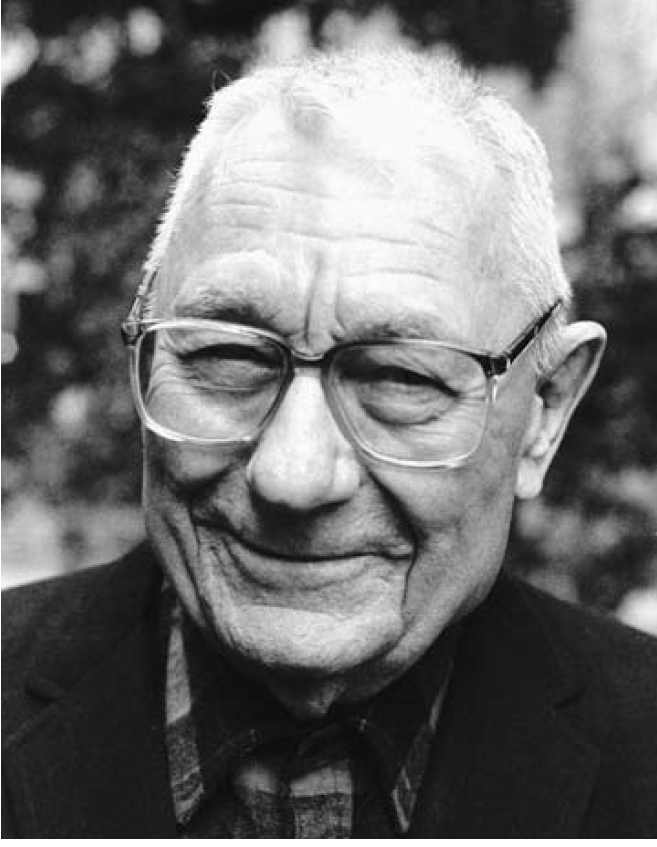
Bob Reed in the late 1990s. Photo Richard Bermack.
In several places, the collection refers to a man named Jeremy Egolf, who I hadn’t ever heard of, but who, working as a student assistant to UW historian Joan Ullman, turned out to have conducted a large number of oral history interviews. As I skimmed through some other University of Washington Labor Archives materials, I came across a list of his interviewees. To my astonishment, they not only included brigadistas but also important local Communists, some of whom had been “dispersed” underground in the McCarthy era. I decided to track Egolf down.
In our digital age, you can find people surprisingly quickly—perhaps to a worrying degree. But in this particular moment I wasn’t complaining. After some time googling, I found what I thought might be Egolf’s contact information. I mulled it over for several days until, late one night, I emailed him. I’m so glad I did. For the past year, we’ve corresponded back and forth, sharing ideas and findings. Egolf gave me access to notes and transcripts of many of his interviews, making my project much more complete.
With the help of Reed’s collection and Egolf’s correspondence, I was able to ascertain that there were approximately 70 brigadistas with ties to Washington prior to their enlistment. They made up the vast majority of all volunteers from the Pacific Northwest. Most of them were members of unions, and if not, they had been inspired by and contributed to the labor movement in one way or another.
Early union popularity in the Pacific Northwest partially stemmed from the fact that Washington industry, especially in the 19th and 20th centuries, was based on extractive industries such as logging, mining, and fishing. In the interwar period, it was commonplace for 100 or more workers to die in Washington logging accidents each year, and many more were injured. Logging camps were often dirty and infested with bed bugs and other pests. Sailing was not much better with horrible food, subpar outfitting, and unfair labor practices. The isolated and harsh working conditions in these industries often helped radicalize workers and bring them together in the face of adversity.
By the 1930s, Washington was one of the most unionized states—a statement that has remained true almost a hundred years later: with 18% of employed Washingtonians holding union cards, we are the fourth most unionized state in the nation. Still, following World War I and under massive government repression, worker militance had declined markedly in the first decades of the century. Few major strikes took place in the Northwest in the 1920s—until the onset of the Great Depression. The first wave of activism in the 1930s was primarily organized by the Unemployed Citizens’ League (UCL), founded in 1931 to distribute food and organize workers. Seattleite and future brigadista Max Farrar was an active member, and so, most likely, was James Kenneth “Jim” Bourne, another future brigadista.
As the government’s inability to address the Great Depression became clear and the country’s economic turmoil worsened, workers turned to the streets in marches, protests, and strikes. As various industries across the state organized, labor unions were born, split, and restructured. The first industries to organize large-scale strikes were those with preexisting union inclinations—particularly IWW-heavy maritime and timber industries, which organized the 1934 Longshoremen’s Strike and the 1935 Timber Strikes (or “the Great Lumber Strike”).
This Depression-era cascade of left-wing organizing promoted class consciousness and solidarity among workers across the globe. Once the war broke out in Spain, it contributed to a sense of duty that workers worldwide felt toward their comrades in Spain. Unions and left-wing political organizations, especially the Communist Party, helped create a social milieu in which enlistment in the International Brigades felt not only important but, to some, like a moral obligation.
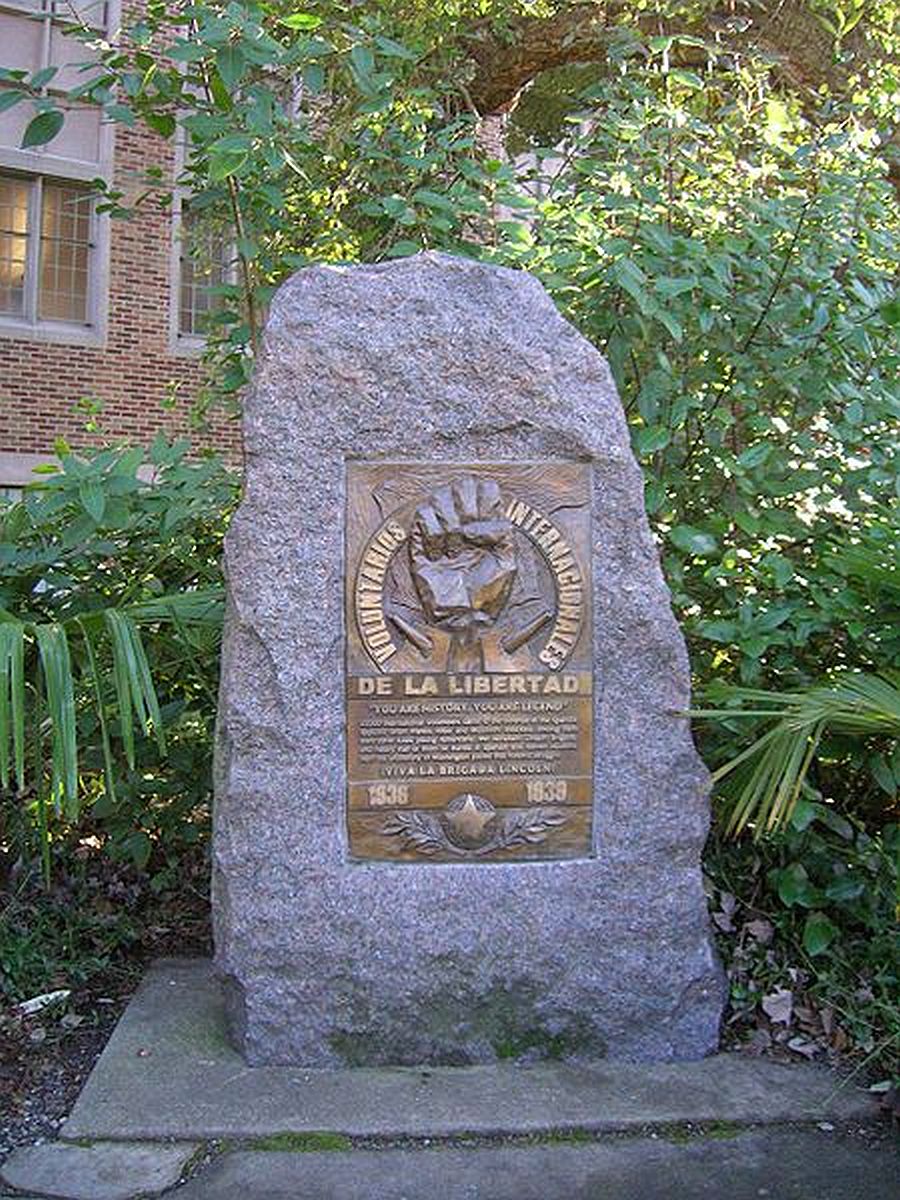
The IB monument at UW Seattle.
So many of the brigadistas from Washington were unionists that in 1937, the King County Workers’ Alliance, which organized workers of Works Progress Administration projects, asserted that about twenty of its members alone were joining the Brigades. Other Washington State brigadistas were involved in unions such as the International Woodworkers of America, the Marine Workers Industrial Union, the Sailors’ Union of the Pacific, the Industrial Workers of the World, or the Seattle Cooks and Assistants Union.
The CPUSA was also essential. Most Washingtonians who enlisted were card-carrying party members, while the few who weren’t were often fellow travelers. The popularity of the CP in 1930s Washington led United States Postmaster General James Farley to allegedly joke in 1936 that there were “forty-seven states and the Soviet of Washington.” (In fact, the quote inspired me to title my thesis The Soviet of Washington: The Washington State Left in the Spanish Civil War, 1936-1939.) During the 1935 Timber Strikes, on July 4, at least 5,000 loggers marched through the streets of Aberdeen and Hoquiam in Grays Harbor on Washington’s Olympic Peninsula, known for its dense old-growth forests. According to sometime Washington CP District Organizer Heinie Huff, of those thousands, only two belonged to the CPUSA: Lloyd “Red” Johnson and Ernest “Ernie” Kozlowski. Both later went to Spain, where Johnson died. Kozlowski was killed in action during World War II. Their story illustrates it was not just union members but especially party members who made the journey to Spain.
Eventually, the union-fueled radicalism in Washington’s major industries spread to other parts of the state. Support for left-wing organizations became quite common. This was particularly true for Seattle, where the Washington Commonwealth Federation (WCF), a popular-front organization created in 1935, ran progressive democratic candidates for all levels of elected office.
By 1937, almost all left-wing organizations in Washington supported the Republic ideologically, and many also did so financially. Early that same year, the WCF’s official newspaper declared, “We are for the Republic of Spain. We are the defense of democracy and popular government. We declare THE GREATEST TASK AMERICANS CAN HELP ACCOMPLISH IN 1937 IS THE DEFEAT OF THE FASCIST INVASION OF SPAIN.” Unfortunately, Franco’s forces were not defeated, and much of the radical organizing the WCF pushed for would eventually be subjugated. Still, for a specific and powerful moment in time and space, it felt possible. Even the revolution felt possible.
To me, it is no mistake or coincidence that Washington was home to these thoughtful, radical workers and that many brigadistas moved here later in life, continuing to promote antifascism and anti-imperialism until their final days.
Jade Doerksen is a recent graduate of Wellesley College. After obtaining her BA in History and Spanish in May 2026, she returned to the Northwest for work. Hear more about her project at the Pacific Northwest History Conference in Spokane, WA, in October 2026. She’d love to hear from anyone who’d like to read her thesis or knew any of the brigadistas from Washington.






