
David Jorge: “Tina Modotti and Vittorio Vidali Embodied the Spirit of Anti-Fascist Internationalism Like No One Else”
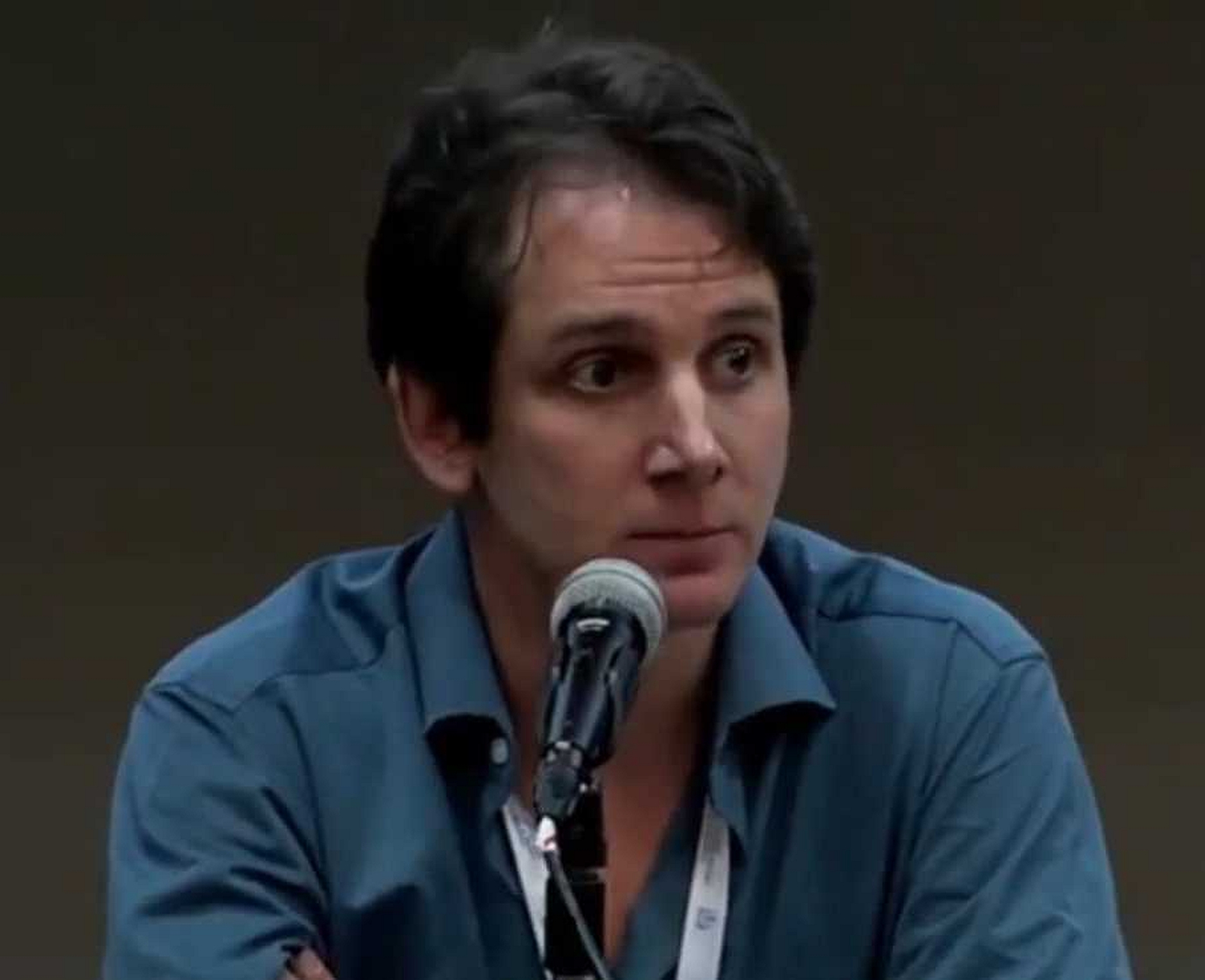
David Jorge
Tina Modotti and Vittorio Vidali, who dedicated a major part of their lives to the Communist International, have long been surrounded by myth. New research by the historian David Jorge suggests that they consistently strove for broad leftist fronts—even when the leadership of the Comintern favored other tactics.
It’s hard to believe that one of the world’s greatest photographers lived through the so-called Spanish Civil War from start to finish without taking, as far as we know, a single photograph. But the truth is that when Tina Modotti arrived in Republican Spain in late 1935, she had just decided to give up for good the camera that had accompanied her since the early 1920s, when her then-partner, Edward Weston, taught her how to use it. At age 39, Modotti considered her political work on behalf of the Communist International to be far more important than making pictures. (For more on Modotti’s relationship with Weston and her political evolution, see David Bacon’s essay in our last December issue.) In Spain, she carried out counterintelligence work; was in charge of the nursing staff at the Maudes Hospital; and assisted children, women, the elderly, and the wounded during evacuations—including several missions under bombardment in the Sierra de Madrid and during the retreat under Italian shelling along the road from Málaga to Almería.
By the time she had to leave the country in February 1939, her partner Vittorio Vidali—better known as Carlos Contreras—did the same. Vidali had worked for the Comintern since the 1920s, first in the U.S. and then in Mexico, where he had been an organizer at the helm of the International Red Aid (SRI) and worked with Latin American anti-imperialist leaders in exile. In Spain, he was the architect of such key Republican initiatives as the Milicias de la Cultura and, above all, the Fifth Regiment—the backbone of the nascent Republican Army, without which Madrid would not have withstood Franco’s attacks. It earned him a legendary status as “Comandante Carlos.”

Tina Modotti, 1921. Photo Edward Weston. Public domain.
Although Modotti and Vidali were both born in northern Italy—she in Udine in 1896; he in Muggia in 1900—they spent much of their lives in the Americas. Modotti, who had grown up as an immigrant in San Francisco, died young, in 1942. Vidali, on the other hand, lived until 1983. After World War II, he had a distinguished political career, first as secretary-general of the Communist Party of the Free Territory of Trieste and later as a deputy and senator (1958–68).
“If there were a prototype of the ideal agent of the international communist movement, Vidali and Modotti would have fit it perfectly,” writes Spanish historian David Jorge in a recent article in the journal Historia Mexicana. He argues that the Italian couple—thanks in large part to their early experiences in the United States, Mexico, and Central America, where they allied themselves with activists such as Julio Antonio Mella, Farabundo Martí, and Augusto Sandino—were pioneers in their commitment to the kind of internationalist solidarity that would reach its peak during the years of the Spanish Civil War and the Anti-Fascist Popular Front (1935–39). Throughout their activist lives, both consistently strove for a broad leftist front, even during periods when the leadership of the Communist International favored other tactics.
David Jorge, born in Lugo, Galicia, in 1987, is a professor and researcher at the Center for Historical Studies at El Colegio de México (COLMEX) who has spent nearly twenty years studying the international context of the Spanish war. He has combined extensive archival research with oral history, conducting lengthy conversations over the years with Santiago Carrillo and other central figures in the political history of the twentieth century. His article on Vidali and Modotti is part of an ambitious project that will result in at least three books, the first of which, De la revolución al antifascismo: La Komintern y el desarrollo de una causa transnacional (From Revolution to Antifascism: The Comintern and the Development of a Transnational Cause) came out in 2023. We spoke in mid-June.
When Modotti and Vidali were working from Mexico with the Anti-Imperialist League of the Americas (LADLA) and with figures such as Mella and Sandino, the Communist International did not precisely favor that kind of alliance.
Exactly. The split between the Soviets and the Chinese nationalists in 1927 marked a turning point. Following Soviet policy, the Comintern shifted between 1928 and 1934 to the policy of “class-against-class,” which ruled out the possibility of alliances with non-communist forces. But Vidali and Modotti came from a very particular background, a multicultural crossroads. As immigrants in the United States and Mexico, they had to operate within networks that were not only transnational but also ideologically quite diverse. This gave them a wealth of experience, a kind of flexibility, know-how, and sensibility that most of the international communist movement lacked prior to 1934. In the United States, where Vidali took charge of the protest campaign against the convictions of Sacco and Vanzetti, he paved the way for a new kind of mass communist internationalism, led by the International Red Aid. But the growth of the International Red Aid, which was quite spectacular, was curtailed almost immediately by the shift toward a class-against-class policy. Later, in Mexico, the LADLA would also serve as a sort of training ground for Modotti and Vidali in dealing with non-communist actors. In some cases, this took the shape of a collaboration; in others, they managed to co-opt them. Farabundo Martí, the Salvadoran, fully joined the communist movement, for example, while the Nicaraguan Augusto Sandino was always a unique kind of fellow traveler. The Cuban Julio Antonio Mella, the Peruvian José Carlos Mariátegui, and the Brazilian Luís Carlos Prestes each presented their own complications. The same was true of the Mexican agrarianists. Anti-imperialism encompassed many things—too many, in the eyes of the communists of the time.
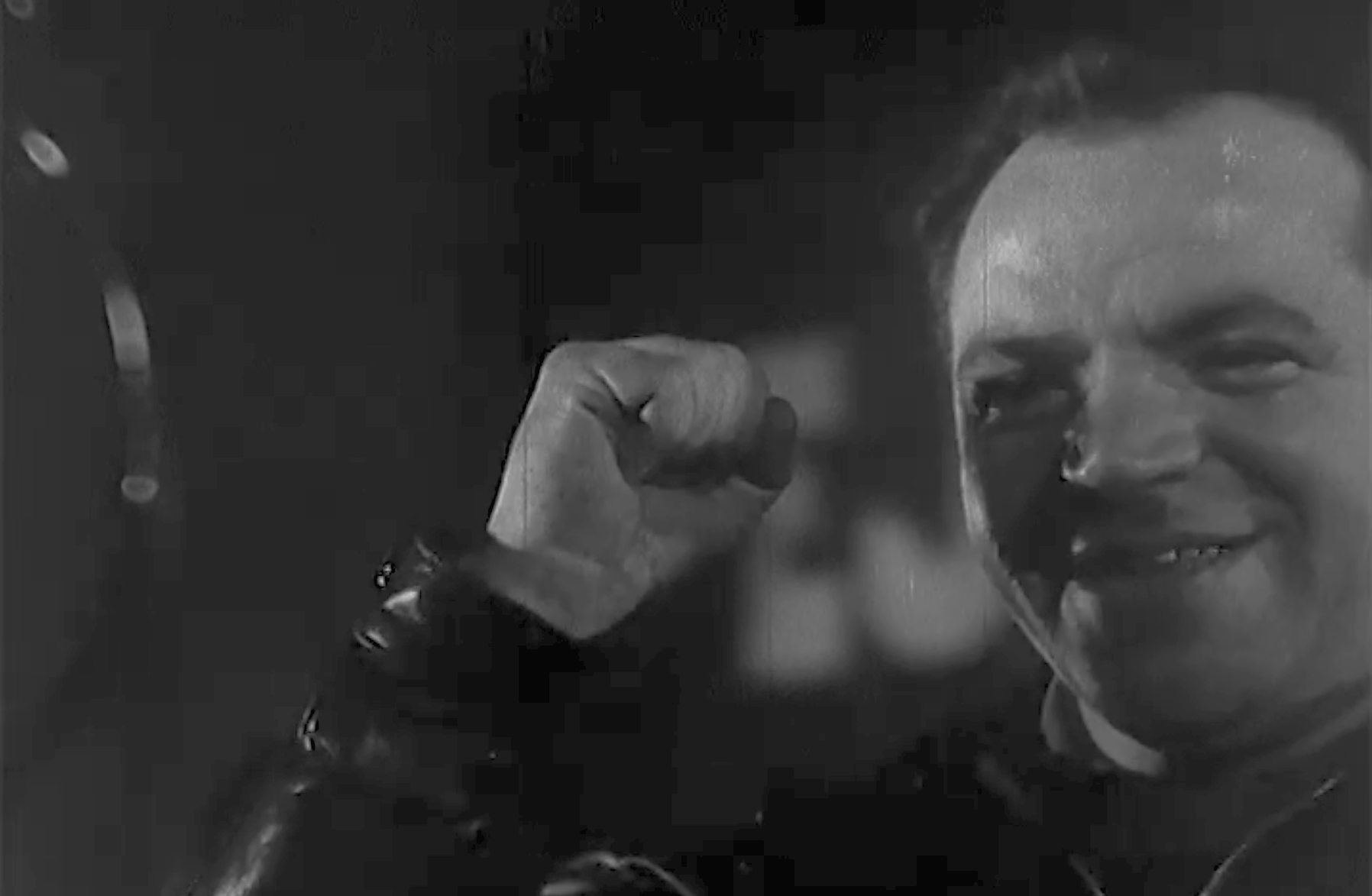
Vidali in 1937. Still from The Spanish Earth (Joris Ivens).
Despite charting their own course, Modotti and Vidali never became dissidents.
Quite the contrary: as dedicated activists, they were always loyal to the Comintern. This is also how they experienced the less pleasant aspects of activism very early on. But even though they never strayed far from the party line, they exercised a level of autonomy that is rarely seen in the international communist movement—let alone before the Popular Front shift of 1935, which in reality began to loom as early as 1933, in the wake of Hitler’s rise to power.
In other words, what constituted a major shift for the Comintern in the mid-1930s was not such a significant one for Modotti and Vidali.
Today we’re quick to slap the transnational label on historical figures and phenomena. But Modotti and Vidali truly were transnational, thanks to their involvement in national and regional struggles in the Americas. That is why it was Vidali who, in 1934, went to Spain to organize aid for those persecuted for the October Revolution. He and Modotti represented a primal form of anti-fascism—an Italian variety, if you will—which they conceived as fundamentally compatible and in harmony with the anti-imperialist struggles in which they had been involved in the United States and Mexico. They helped establish a politically and ideologically cross-cutting front whose mobilizing force relied on a combination of well-designed propaganda and acts of solidarity. While the social-democratic Second International was still criticizing the October 1934 revolt, it was the communist Third International that came to the aid of imprisoned Spanish socialists and the families of victims. At the same time, the International Red Aid sought to unify political actors for the anti-fascist cause. By prioritizing the containment of fascism over revolutionary goals, the communists pushed for moderation, while it was the Socialists who pushed for radicalization.
Despite their loyalty, Modotti’s and Vidali’s relationship with Moscow proved quite complicated over the years.
It was. If they managed to survive it, it was because they always had the support of Elena Stasova, the top leader of the International Red Aid, who never stopped looking out for them. She worked to get them out of the USSR in 1934, for example, when—even before the great Soviet repression began—Vidali was already arousing suspicion and hostility because he said what he thought and operated quite independently, clashing with Communist orthodoxy. In 1939, after the Spanish Civil War, Stasova realized he and Moddoti would be in too much danger in the Soviet Union, so she sent them back to the Americas. In Moscow, Vidali’s autonomy was read as insubordination, defiance, or potential treason. In fact, in Mexico, he would eventually fall from grace just ten days before the failed assassination attempt against Trotsky led by David Alfaro Siqueiros. Victorio Codovilla, the Comintern’s leading official in Latin America, who had also operated in Spain, then sent a report to Moscow harshly criticizing Vidali, who was subsequently placed under quarantine. This is why Vidali did not participate in the Trotsky affair, contrary to what was later claimed. Moscow in fact requested reports on Vidali’s character and reliability from various Spanish communists, including Enrique Líster and Enrique Castro Delgado. Influenced by Codovilla’s report, the Soviets came to suspect that he might have somehow sabotaged the assassination attempt led by Siqueiros through his influence over former Mexican combatants in the Spanish Civil War.
The years following were nightmarish. Vidali was treated like a pariah, without ever understanding why, as he survived by working as a journalist for Vicente Lombardo Toledano’s newspaper. He died without ever finding out what had happened. In my research, however, I discovered the root of the conflict. In 1939–40, discussions were taking place between New York and Mexico City about what to do with Hernán Laborde and Valentín Campa, leaders of the Mexican Communist Party who had been expelled for their opposition to Trotsky’s assassination. Codovilla wanted to impose harsher punishment on Campa and Laborde. But Vidali was opposed. That was what led to his ouster and ostracism: the Vidali-Modotti couple was shunned by both the Mexican and Spanish communists. Thus, the party lost two people who could have been highly beneficial for the initial integration of the communist exiles in Mexico—a group that, truth be told, behaved like a bull in a china shop. For Vidali and Modotti, personally, it was a moment of total breakdown. In the end, Codovilla—a political boss if ever there was one, a manipulator, and a Stalinist in the truest sense of the word—proved to be a disastrous figure for Latin American communism, just as he had been in Spain during the war.
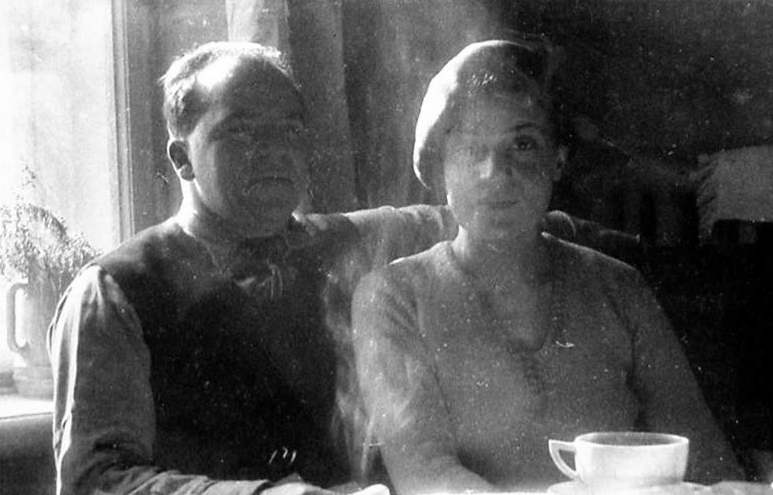
Modotti and Vidali in Moscow, 1930s.
Modotti’s and Vidali’s methods were actually more effective.
Yes, for several reasons. As longtime transnational actors, they had their own circles and networks wherever they went. Their only homeland, in the end, was the Communist cause. The international communist movement was their anchor to the world. Their ties to the world of art and culture were particularly powerful. As a photographer, Modotti had an artistic sensibility that predated her militant political commitment. When Vidali arrived in Mexico, Modotti connected him with filmmakers, painters, writers, and poets—contacts that would serve him well when he arrived in Spain and had to garner support from the global cultural community for the Republican cause. In Mexico, Modotti and Vidali had learned to work together with a broad range of people, whom they nevertheless saw as comrades in the struggle. Once in Spain, how could they not also view socialists like Negrín, or bourgeois republicans like Azaña, as essential fellow travelers? Vidali’s success with the Milicias de la Cultura—working with poets like Antonio Machado, Pablo Neruda, and Rafael Alberti—also stemmed in large part from his Mexican experience. Later in life, he revealed himself to be a wonderful writer. His memoirs are extraordinary, and he left behind a couple of unpublished manuscripts of great historical value. I had access to those thanks to his son, Carlos Vidali, and the Italian-Mexican writer Claudia Marcucetti—two people of immense solidarity and with a deep awareness of the value of delving into the past, without any fear of exploring some of its darker aspects. The oral history interviews that Concepción Ruiz Funes did with Vidali in 1979 show an exceptional clarity of perspective and sensitivity. All of which refutes the slanderous myth of Vidali as a sinister agent of international communism, an alleged accomplice in the deaths of Trotsky, Modotti, and many others. In 1981, in Trieste, the Mexican writer Elena Poniatowska—who at the time was writing her novel about Modotti, Tinísima—interviewed Vidali over the course of several days. What emerges from the transcripts, which she generously shared with me, is once again Vidali’s clear-eyed, self-critical vision. He clearly explains the failure of the Soviet model and the disintegration of the international communist movement, almost a decade before the fall of the Berlin Wall!
In your article, you distinguish two phases of the international anti-fascist front: the period from 1935 to 1939, which was interrupted by Stalin’s pact with Hitler; and the period following the German invasion of the USSR in June 1941. You suggest that the second phase had little to do with the first.
Yes, indeed, what emerged in 1941 was something else entirely: a form of anti-fascist unity based on pragmatism, emerging from the necessities of the war, but also drenched in mutual mistrust. The German-Soviet pact of August 1939 is often described as a massive betrayal of the anti-fascist struggle. And of course it was disturbing. But it must be seen in connection with the democracies’ capitulation to Nazism a year earlier, in Munich, and with the democracies’ betrayal of the Spanish Republic in 1936. Both London and Moscow sought to divert Hitler’s appetite. I mean, what were the Munich Agreements if not a non-aggression pact between the Western democracies and Nazi Germany? It was the equivalent of the Ribbentrop-Molotov Pact—which, conversely, can be seen as the Soviet version of Munich. Both sets of agreements followed the same logic and sought to achieve the same goal: to avoid isolation in the interwar ideological triangle by shifting the confrontation toward the other two points.
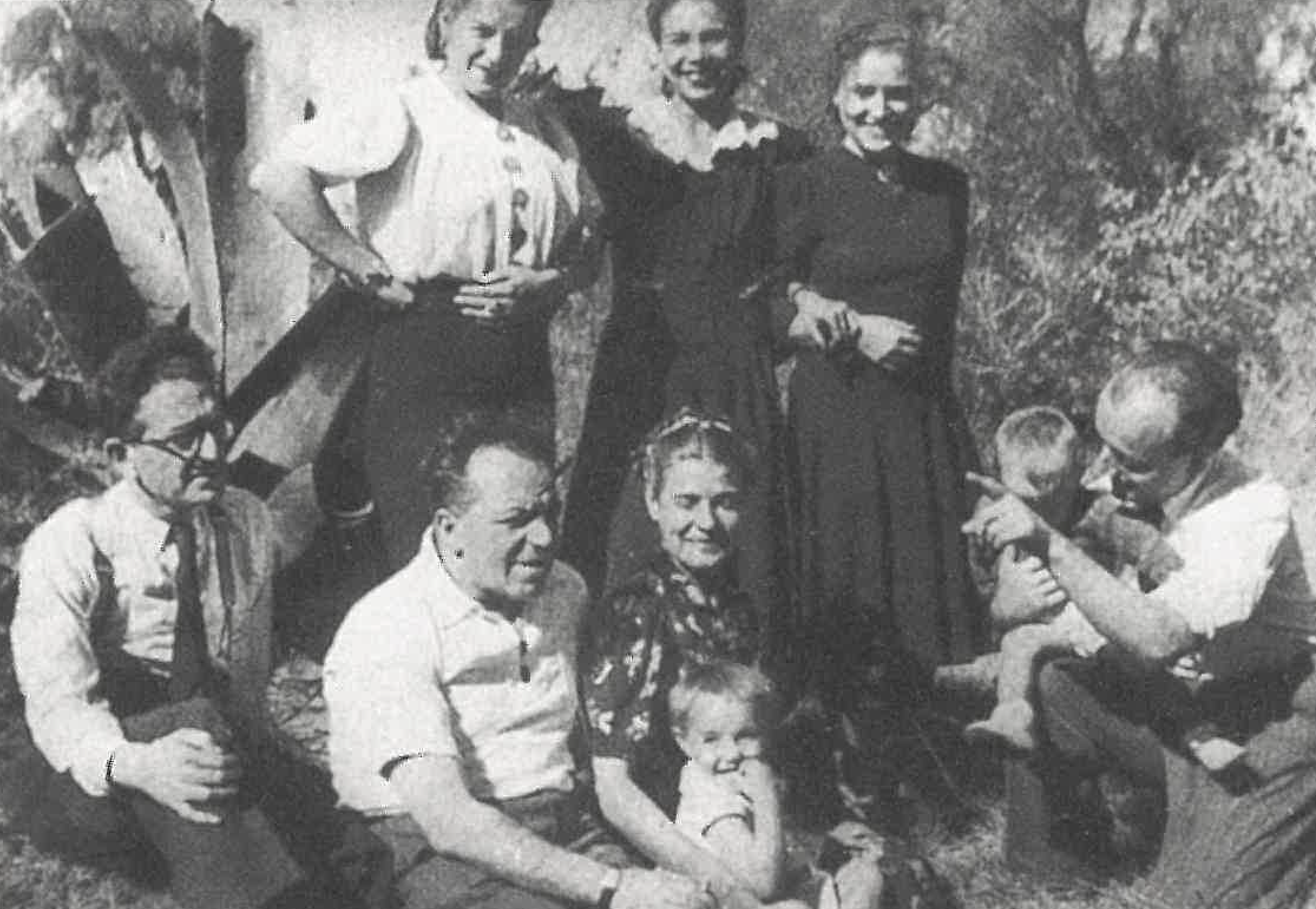
Vittorio and Tina, seated in the middle, with friends in Mexico, 1940.
In any case, it was a logic that destroyed the spirit of the anti-fascist front.
Of course. That’s why, for me, the alliance that emerged in 1941 stands in stark contrast to the proactive, mass-mobilizing, cross-cutting kind of anti-fascist unity that we saw in the 1930s. We must bear in mind that, in reality, the international communist movement never truly became internationalist again after 1939. What I mean is that it regained the truly global perspective it had in the 1930s. In that sense, the Spanish Civil War was indeed “the last great cause,” as it has since come to be widely known. Following the Munich Agreement and the fall of the Spanish Republic, the shift by Stalin and the international communist movement was drastic and irreversible. It is no coincidence that, at the time of the victory at Stalingrad in 1943, Stalin dissolved the Comintern, which in any case had become an empty shell over the previous five years. This shift marked the nationalization of the Communist cause—the “Sovietization” of an international communist movement that, at bottom, had always been at odds with the purely national interests of the USSR.
In addition to archival research, over the past 20 years you’ve also spent long hours interviewing figures such as Santiago Carrillo, his wife Carmen Menéndez, Vidali’s son, and half a dozen people who could have been your grandparents or great-grandparents. I imagine that, inevitably, those personal exchanges give rise to an emotional connection of sorts. How do you manage that dynamic, especially now that almost all of them have passed away?
You’re right that there is an undeniable emotional dimension to this type of work. But precisely for that reason, it’s important to rein in the subjective aspects of the relationship between the researcher and his subjects. What has driven me all this time is an obsession: to know and understand as much as possible about a set of distant historical episodes. For me, the direct, human contact with survivors from that time has served to satisfy that curiosity. But that also meant that I could never allow oral sources to take precedence over primary sources or documentary verification, no matter how gratifying the conversations may have been. Of course, it has been fascinating to speak face-to-face with the protagonists of the history—or prehistory—that I am in the process of reconstructing so obsessively. The opportunity of direct, human contact with some of the last witnesses to that history is nothing short of a privilege.
Sebastiaan Faber teaches at Oberlin College. A Spanish version of this interview appeared in CTXT: Contexto y Acción (www.ctxt.es) in July.






