
Book Review: A Palestinian Memoir
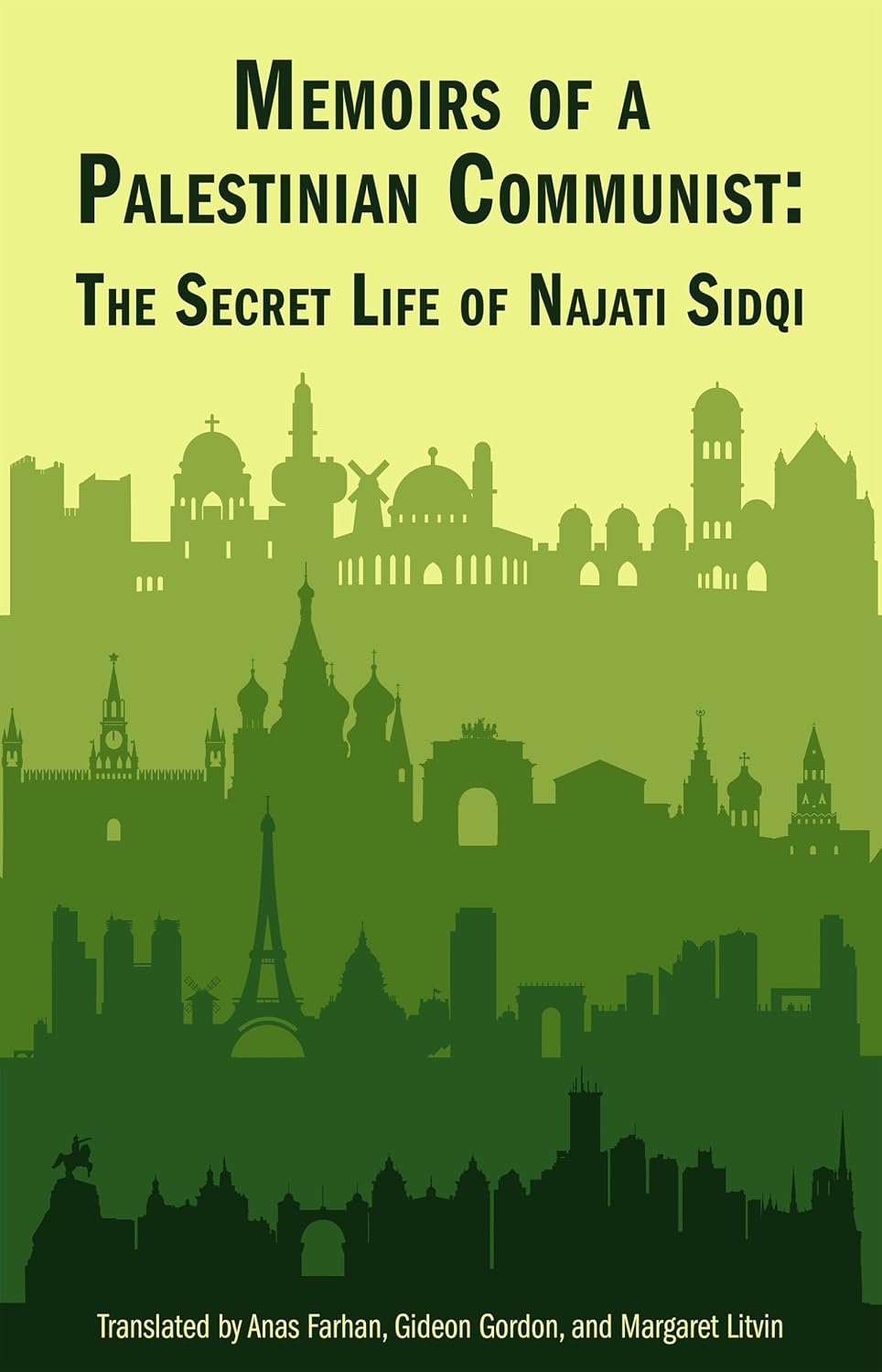 Memoirs of a Palestinian Communist, by Najati Sidqi. University of Texas Press, 2025. 164 pp. $21.95
The early Palestinian Communist Najati Sidqi became well known as a writer between 1920 and 1940. He died in Greece in 1979 after a long life of activism, exile, and travels across Asia and Europe. His memoirs, now finally available in English, were originally published in Arabic in the 1970s.
Born in Jerusalem in 1905, Sidqi was pulled into the struggle from the moment he first encountered communist ideas as a teenager. Not long after, when he was only 20, he was sent to Moscow, where he spent five years. The political and intellectual training he received in Russia served him later in life when he made a career as a struggling editor and writer in Cyprus and Beirut.
The book touches on important moments in European and Middle Eastern politics that include the early formation of the Palestine Communist Party, the international milieu at the Comintern in Moscow, the revolts and Jewish-Arab political formations of the interwar period, the Spanish Civil War, and the rise of Nazism. As a committed Communist, Sidqi was privy to all these events, which he describes with humor and in lively detail. Although he observes political history through his own life story, the fact that he leaves out important elements of his personal life renders his account somewhat distant. His life partner Lotka Lorberbaum Sidqi, for example, enters in medias res halfway through the book, and we hear surprisingly little about his daughter Dawlieh (“Internationale”), who was raised by strangers at the Interdom International Children’s Home outside of Moscow while her parents were on the run from the British Mandate authorities. In 1940, Sidqi was expelled from the party for publishing a book on Nazism that was partly based on travels in Germany in the early 1930s. Coming face-to-face with fascism convinced Sidqi of the need to repudiate any claims to cultural affinity between Hitler’s project and Arab-Islamic culture.
For historians of Arab communism, there is much to gain from these colorful memoirs. In addition to a detailed account of the formation of the Palestinian Communist Party (which largely squares with authoritative versions of historians like Musa Buediri and Ran Greenstein), there is a long description of the five years Sidqi spent with other Arab communists in Stalin’s Comintern school for “Toilers of the East.” The book also describes Arab-Jewish relations in Communist circles, which soured after the 1929 unrest. The reader is left with the impression of a very small but unusually committed group of Communists who were from the beginning in close contact with the central leadership in Moscow. They reproduced a centralized hierarchy where ideological differences of opinion could lead to people disappearing from the party—or altogether. Yet those who stayed the course and committed to the cause were granted an adventurous life full of travels, missions, important decisions, and face-to-face encounters with historical figures like Bukharin, Nehru, Mao, and Dolores Ibárruri, La Pasionaria.
The writing veers between anecdotal and analytical passages. Sidqi’s voice is sometimes wry, rarely sentimental, but always full of humor and intellectual curiosity. He embraces the adventure of internationalism, where dangerous missions, long travels, and personal sacrifices are never questioned but accepted as what it means to be a devoted Communist. So are friendships with comrades, the necessity of the struggle against imperialism, and political projects as they developed through the formation of nationalist movements and trade unions alongside the communist movement in Palestine. Although Sidqi is committed to the cause, he does not shy away from exposing the absurd misperceptions that Communists had of each other, and the absurdity wrought by certain ideological strictures.
Sidqi’s devotion to the Comintern made him privy to key debates inside the Bolshevik leadership in the 1930s. Having just returned to Moscow from a reconnaissance visit to Tashkent with the Syrian communist leader Khaled Bakdash in 1936 to study the Soviet’s dealing with minorities, he was sent on an important mission. The Spanish Civil War had broken out, and the Comintern wanted Sidqi to influence Moroccans to turn against Franco. This would strengthen the anti-fascist struggle, which the Soviet Union at this stage still supported. By way of Paris and secret liaisons in Perpignan, Sidqi made his way to Barcelona and Madrid. We follow him in his entanglements with the international brigade and the Spanish communist leaderships, as the battle with Franco rages. Sidqi’s assignment is to persuade Moroccans to change allegiance, working undercover as a journalist at the front. He helped establish a Spanish-Moroccan association and set up propaganda media to reach the population in north Africa. The efforts may not have succeeded, but Sidqi’s description of his eight months in Spain provides rich insights into the war.
Historians of Arab communism and international political movements in the interwar period will find a lot of interest in Sidqi’s book, whether it’s his time in Palestine and Moscow; his work to unite communist groups in the Arab countries and particularly between Syria, Lebanon, and Palestine; his time in Spain and Paris in 1936-37; or his engagement in Beirut’s leftist intellectual life, which would become such a crucial arena after the Nakba. As the memoir of a quintessential “roaming revolutionary” of the 20th century, his story illuminates the Palestinian liberation struggle, communist internationalism, Arab leftism, and Arab political and intellectual history all at once. Even newcomers to these topics will find Sidqi’s style entertaining, and we should be very thankful that the book’s translators, Anas Farha, Margeret Litvin, and Gideon Gordon, have made this available to English readers.
Sune Haugbolle, Professor in Global Middle East Studies at Roskilde University in Denmark, works on social memory, the history of radical movements, and transnational solidarity, with a focus on Middle Eastern Studies. He is author of War and Memory in Lebanon (Cambridge, 2010).






