
Undergrads Discover Stories That Don’t Make It Into Textbooks
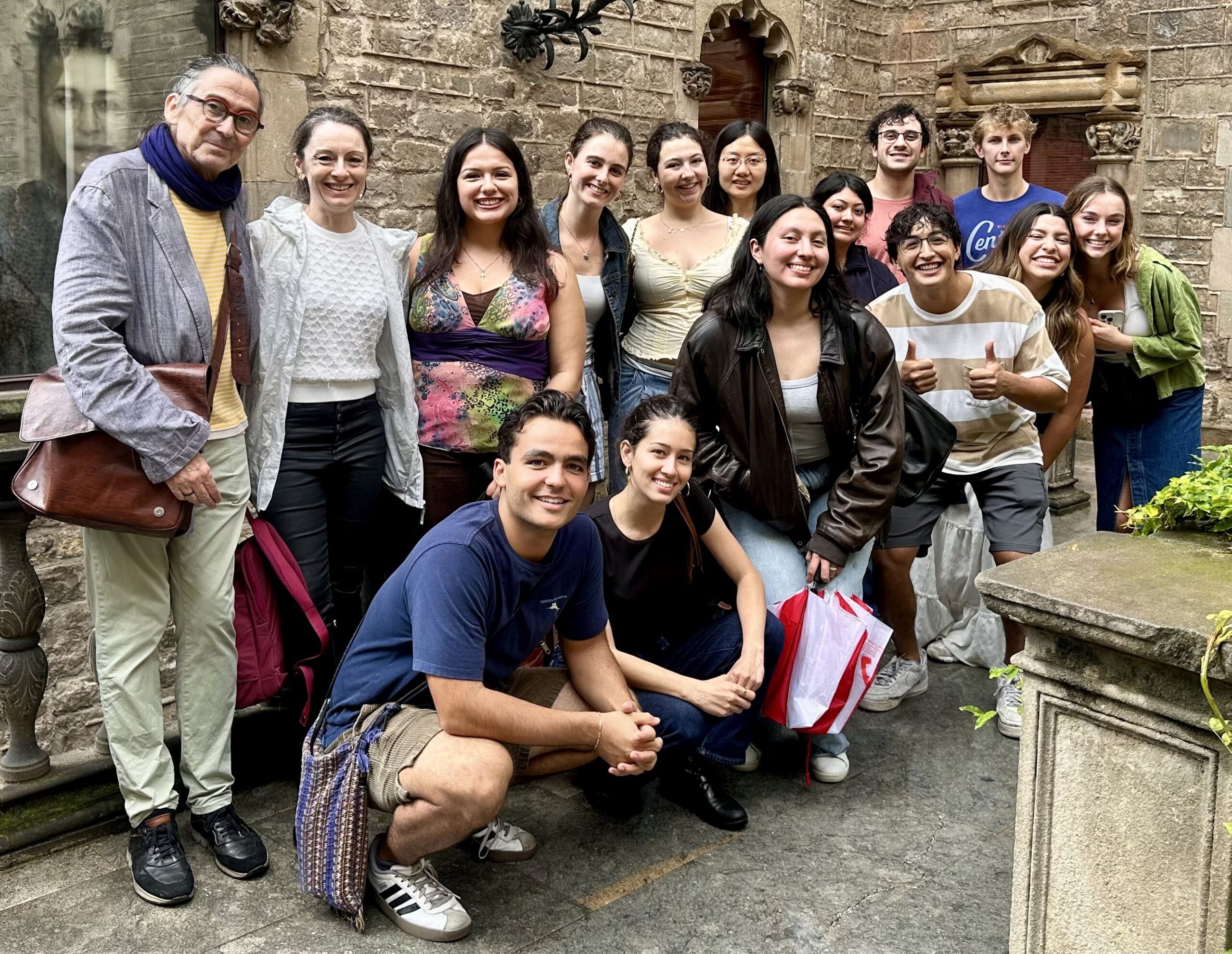
The students in Barcelona, with Ricard Martínez (left) and the author.
Last year, a group of Yale undergraduates got the chance to immerse themselves in two kinds of archives: the university’s unique Spanish Civil War collection and the streets of Barcelona.
Yale’s Spanish Civil War collection, painstakingly developed by librarian Jana Krentz, is a small treasure containing posters, letters, diaries, eviction notices, dentist bills, budget ledgers, photographs, coloring books, board games, and postcards from Spanish refugees in France. Rather than discussing famous battles or politicians, archives like this one preserve traces of regular people’s lives, documents that were not meant for us to see—but that nevertheless end up before our eyes.
Archives can be hard to read for undergraduates. Many of the documents, for example, are written in cursive. Others are difficult to make sense of without proper context. Once the students overcome these barriers, however, they are hooked. They feel they are directly accessing people’s private sphere, getting a glimpse of everyday life during the war. An incarcerated man writing to his little sister has drawn a Mickey Mouse soldier on the envelope to make her smile. A young woman’s diary describes the fights she has with her boyfriend and the horchatas she drinks with her friends but doesn’t mention the war at all. A girl writes happily in a notebook how the Francoist troops are winning battle after battle; she can’t wait for them to take Barcelona from the Republicans. Incarcerated individuals with the smallest handwriting use every bit of space on the page to document their experience in prison. There is a visible longing for communication, for writing about hardships, resistance, and suffering. But there is also hope and excitement.
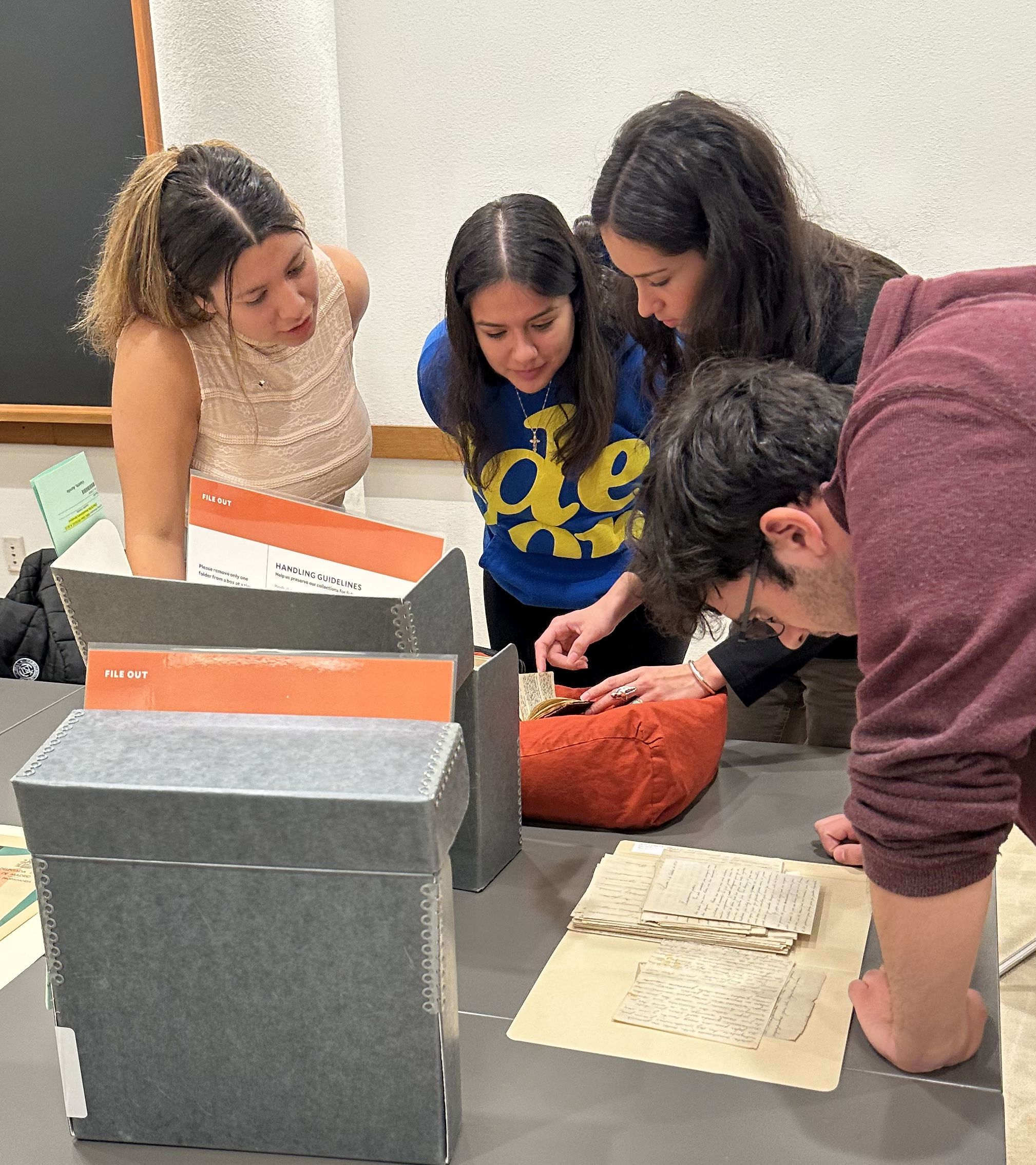
Working in the archive.
Last year, I was able to incorporate Yale’s collection in an advanced undergraduate seminar on the practices of political resistance from the nineteenth century to the war of 1936. At the same time, I secured the Joshua G. Dick and Kristin E. Krebs-Dick Fund from the MacMillan Center for International and Area Studies to take my class to Barcelona. Both experiences proved transformative. Most students had never been to Barcelona, but neither had they ever set foot in an archive. It was their first time experiencing the thrill of trying to understand history by engaging with authentic documents. For their final paper, I asked them to do an in-depth research project on one archival object of their choosing—a challenge that, more often than not, required further archival digging.
When they got to Barcelona, my students experienced another archive altogether: the city itself. Among other activities, we went on a guided tour of the city inspired by the photographic record of the war. Led by photographer and researcher Ricard Martínez, we saw that the city still carries plenty of signs of the conflict, including bullet marks on the walls of the Plaça de Catalunya. Following in the footsteps of Catalan photographer Agustí Centelles, students got a first-hand sense of the way a photojournalist works. Martínez’s tour showed how a single image taken on a Barcelona street in the summer of 1936 could become an iconic representation of the conflict that would travel the world.
The artefacts in Yale’s Spanish Civil War collection and the streets of Barcelona allowed my students to get a glimpse of lives and stories that don’t usually make it into textbooks or travel guides; these two archives convey the simple but compelling truth that the past –no matter how remote or distant– was once somebody’s throbbing present. And the students came to understand that the thrill of that discovery is the origin of true historical understanding.






