
Victor Grossman (1928-2025)
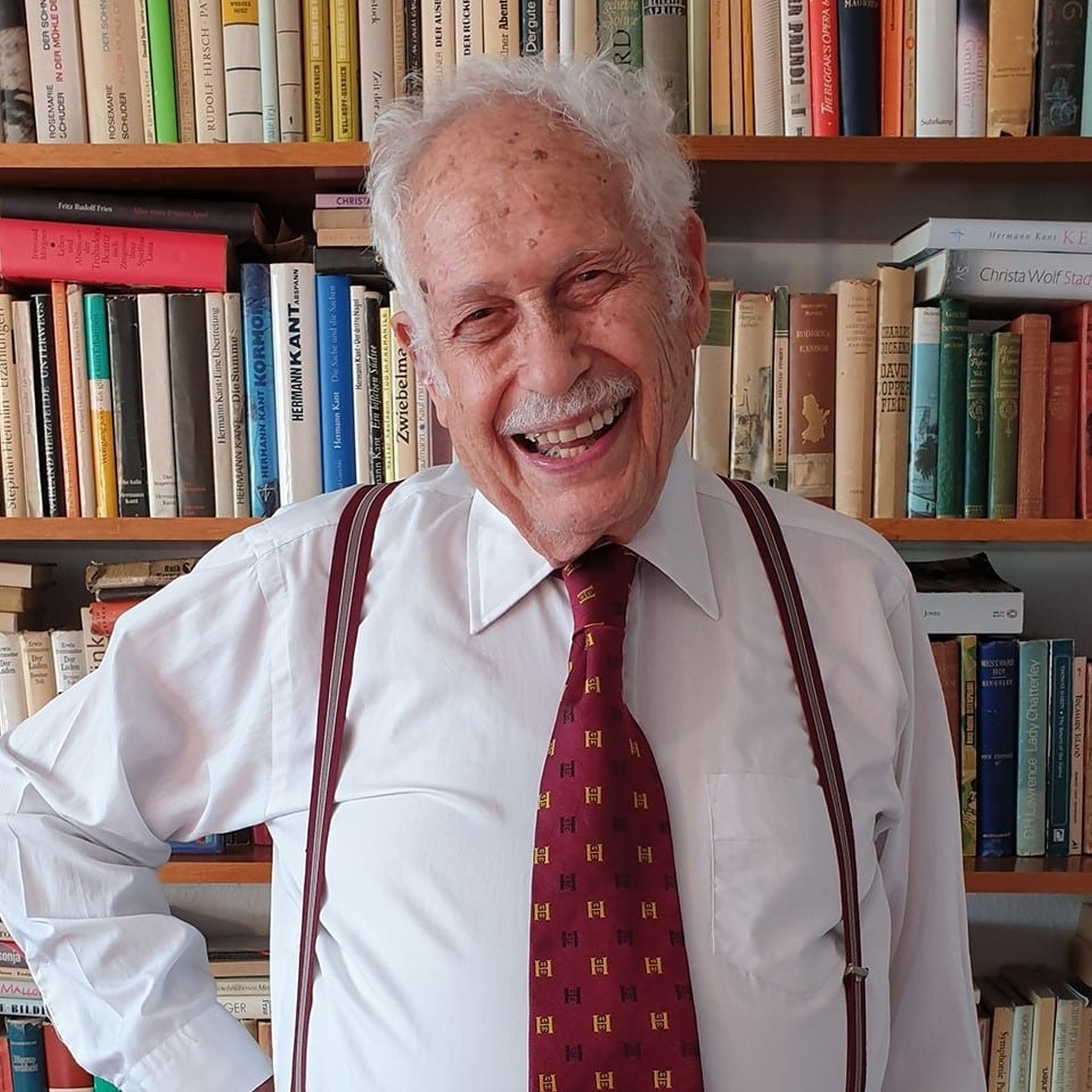
Photo Monthly Review.
Victor Grossman, who died in Berlin on December 17, 2025, at 97, was a lifelong communist, journalist, and bridge-builder between the United States and the socialist world. Born Stephen Wechsler in New York City on March 11, 1928, to a Jewish family that had fled tsarist pogroms, he came of age amid the Great Depression and gravitated early toward the Communist movement, joining the Young Communist League in 1942 and the CPUSA in 1945. After studying economics at Harvard and graduating with honors in 1949, he followed the party’s call into industrial work in Buffalo, organizing steelworkers and learning to “speak the workers’ language.”
Drafted into the U.S. Army during the Korean War and stationed in Bavaria, Wechsler faced court-martial and prison for concealing his party membership. On August 12, 1952, he made the fateful decision to desert, swimming across the Danube near Linz into the Soviet zone of Austria. After interrogation, he was sent to the newly founded German Democratic Republic, where he took the name Victor Grossman to protect his family from persecution. He worked in industry, and then studied journalism at Karl Marx University in Leipzig, eventually building a life as a journalist, editor, and commentator in East Berlin.
In the GDR, Grossman became a key mediator of “the other America,” promoting progressive U.S. culture and figures like Paul Robeson and Pete Seeger. He edited and wrote for English-language outlets such as Seven Seas Publishers, the German Democratic Report, and Radio Berlin International, and later worked as director of the Paul Robeson Archive at the GDR Academy of Arts. His liner notes, articles, and radio series introduced GDR audiences to American folk music and political song, culminating in his role as interpreter and guide during Seeger’s triumphant 1967 visit to East Berlin, which helped inspire a new political song movement and the later Festival of Political Song.
Grossman felt a deep connection to the memory of the Spanish Civil War and its international volunteers. In 1961, he served as interpreter for Abraham Lincoln Brigade veterans such as Bill Bailey, Milton Wolff, Moe Fishman, and Ruth Davidow during their visit to East Berlin. In the GDR and, after 1990, in unified Germany, he was active in the Association of Fighters and Friends of the Spanish Republic, helping keep alive the antifascist legacy of the International Brigades after the last German fighter died in 2012. His German‑language history of the war, Madrid Du Wunderbare (2006), linked the struggles of the 1930s to later fights against fascism, war, and reaction.
Even after the fall of the GDR, Grossman remained committed to socialism, joining Die Linke’s Communist Platform and turning his Karl‑Marx‑Allee apartment into a hub of tenants’ organizing and peace activism. He wrote widely for left publications, including his memoir Crossing the River and the newsletter Berlin Bulletin, always insisting on a critical but loyal defense of the GDR’s antifascist aspirations.






