
30 Lincoln Kin Approved for Spanish Citizenship
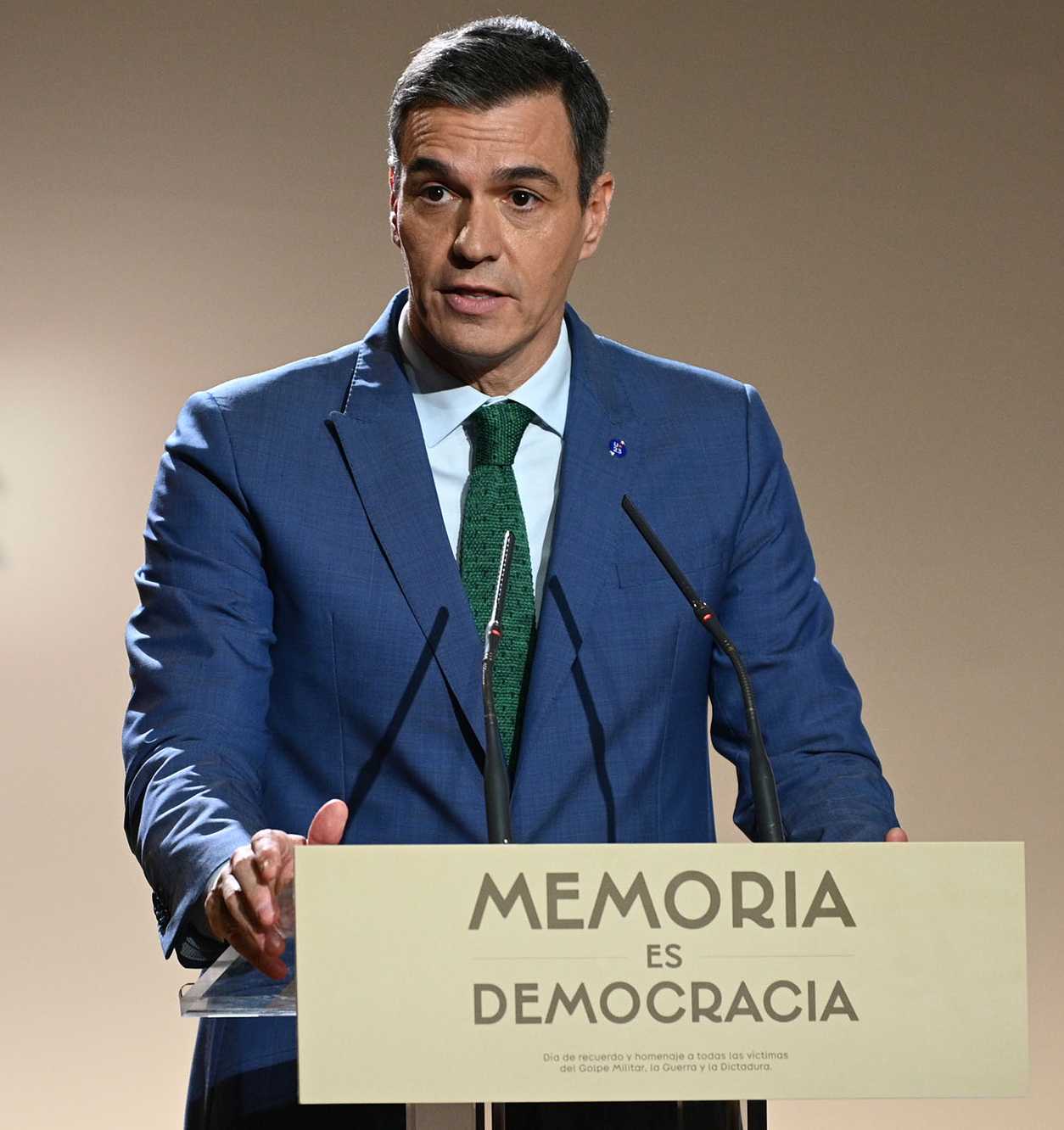
Prime Minister Pedro Sánchez announcing the citizenship decision.
This past November 4, the Spanish government honored a promise made in the 2022 Law of Democratic Memory by approving the applications for Spanish citizenship for some 170 descendants of International Brigade volunteers. The group included thirty family members of the Lincolns. “My father went to Spain to fight fascism—and now I may have to go there to escape it.”
“I have traveled to Spain many times,” says Nancy Wallach, daughter of Hy Wallach and longtime ALBA board member, “and what moves me most is seeing the appreciation the Spaniards have for the International Volunteers, telling us that their sacrifices were not in vain.” Wallach was among the first American descendants of the International Brigades to send in her application. “It was a way,” she says, “to honor my father, who did not live to take advantage of the offer of dual citizenship offered to Brigade members, although I know he would have wanted to, and all the other Lincolns. In 1938, after all, La Pasionaria invited them to return ‘when the olive tree of peace blossoms, intertwined with the laurels of victory of the Spanish Republic.’”
Janak Ramakrishnan, a grandson of Bill Susman, says that he has always held a “deep admiration for the bravery of the vets,” whose commitment to the cause of antifascism shows “that people can be truly selfless.” Concerned with the political situation in Spain, Ramakrishnan says he plans to vote in upcoming elections.
For his mother, Sue Susman, who was born in 1947, being the daughter of a Lincoln has always been a double-edged sword. There was “pride and fear,” she explains: “Pride that my father fought against fascism, but also fear, as he was blacklisted on coming home. Living through the McCarthy period, we were extremely careful about what we said on the phone or to people we didn’t know. When I had my first serious boyfriend, I finally dared to reveal that my father had fought in Spain. To my amazement, he knew nothing about the Spanish Civil War!”
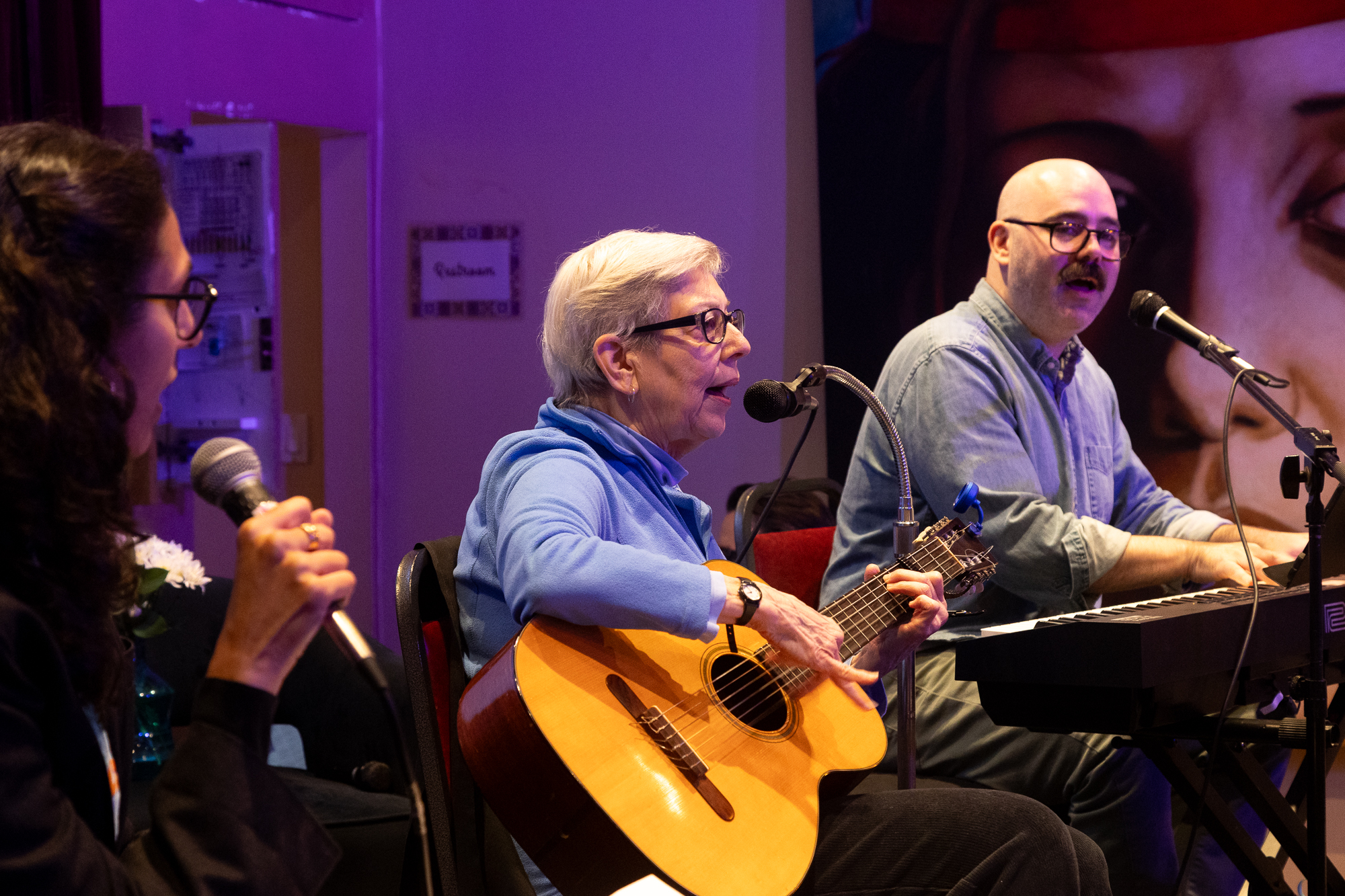
Sue Susman (middle) at La Nacional (NYC) in December.
Susman took advantage of the citizenship offer, she says, to honor her family’s “historical connection to Spain”—but also, in more practical terms, “to have an alternative, given this country’s turn toward fascism.” The irony is stark, she notes: “My father went there to fight fascism—but now it’s conceivable that I may go there to escape fascism.” That, too, is an unsettling prospect: “I am very much an American with hopes for this country and the survival of its constitution. I fear that my tie to Spain is mythical rather than real. But when I traveled there for a brief few weeks, that was a very emotional time for me.”
“George Cullinnen, my grandfather, taught me that you must fight for what you believe in,” says Matthew Cullinen, who adds that he was impressed with the words of Prime Minister Pedro Sánchez when he announced the citizenship measure. “Democracy,” said Sánchez, “had to be wrested from the ground up. Freedom was not a gift; it was a conquest of the whole of society.” “This is just as true today as it was in 1937,” says Cullinen, “and like my grandfather I am proud to be an anti-fascist, even if my government labels me a subversive—or worse.” Deena Poll Goodman, too, applied “to honor the legacy of my grandfather and to be able to work and live in Spain.” She adds: “I learned so much more about my grandfather thanks to the Spanish and Russian archives and amazing people at the University of Barcelona and the historians I have met along the way.”
“Spain has been a key part of my life,” says Peter Hartzman. “For one, because my parents met in Benicàssim: my mother, May Levine Hartzman, was a nurse and my father, Jack Hartzman, an ambulance driver. We were always aware of why our parents went to Spain and why it was important to them. It was a touchstone for how we led our lives. In fact, a good part of my own life has been devoted to honoring the contributions of my parents and working for Spanish democracy.” Hartzman applied for citizenship in Spain for several reasons, he says: “to acknowledge my parents’ participation in the fight for democracy, out of pride in their contributions, and to formalize our family’s relationship to the Republic. But it also provides a potential escape valve given the state of democracy in the US right now.”
Paul Fitzgerald, son of Lincoln vet Daniel Fitzgerald, says that his father’s “commitment to the antifascist struggle in Spain has had an enduring impact on my life. His courage and commitment to the struggle in Spain and, afterwards, as a US combat soldier in WW2, set a very high standard for me. Over the years, as I continue to learn more about Spain and the Lincoln Brigade, my respect has only deepened.” To respond to Spain’s invitation, he says, “felt like an obligation.”
“I am very proud of my father, Gerald Cook,” says Catherine Cook. “His service in the Spanish Civil War has meant the world to me. For my part, I vow to defend Spanish democracy and support any effort to help the world know about the IB and the war they fought in which many brigadistas lost their lives.”
Many of the applicants relied on ALBA, Patricia Ure, and the Spanish Friends of the IB (AABI) for help in their application process. “I so appreciate the work of ALBA,” says Cullinen. “Patricia was invaluable in her dedication and support,” Wallach adds. For ongoing applications, ALBA continues to work with AABI.






