
In Freddie Martin’s Footsteps: American Nurses in Republican Spain
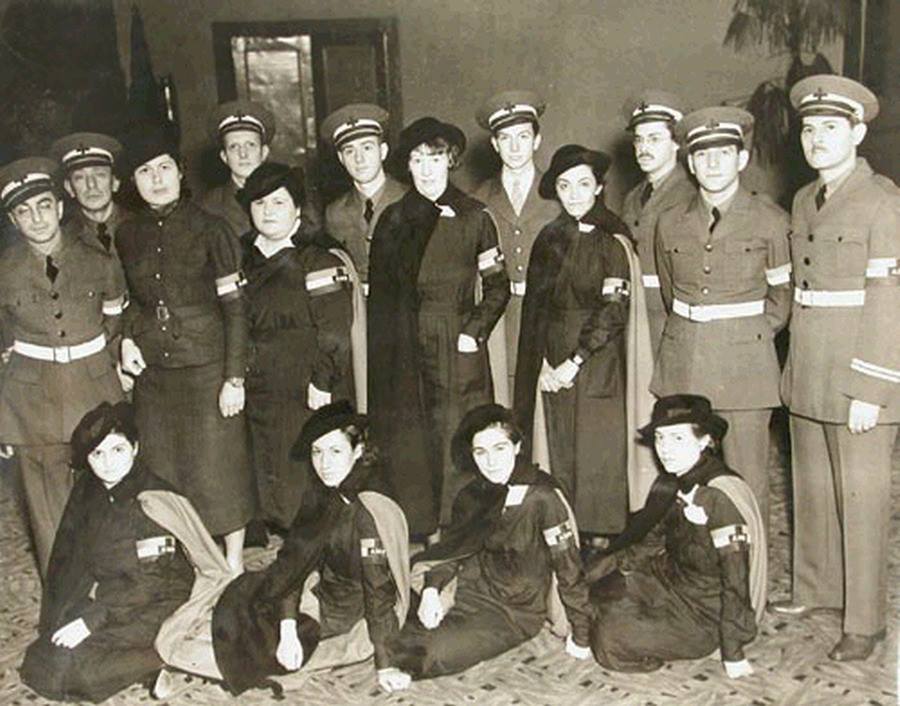
First group of American Medical Bureau Volunteers. Freddie Martin stands center
Close to 35 years after serving as a head nurse in the Spanish Civil War, Fredericka Martin, by then an accomplished author, returned to Spain to revisit the hospital sites where she had her fellow volunteers had saved hundreds of lives. Another half century later, Gina Benavidez, a doctoral candidate, followed Martin’s trail.
In 1972, Fredericka Martin, in her late sixties, walked up and down the cobblestoned streets of Murcia, a city in southeast Spain, looking for the locations of the former International Brigades (I.B.) hospital sites where a handful of her fellow American medical volunteers had worked on behalf of the Republic during the Spanish Civil War 35 years earlier. Martin, who had spent years researching the medical history of the international contribution to the Spanish Republic, only had a few days to spend in the town. As she walked through the city, armed with notes, she talked to anyone and everyone. Some were willing to help her, such as the University caretaker, who confirmed that the I.B.s had been there. Others were more reluctant. An ex-carabinero-turned-newspaper-seller begged her to stop asking questions about the war. “I suffered enough,” he told her with trembling lips. Along with the University hospital, Martin was able to locate the former hospital on the Trapería, now a delightful pedestrian shopping street in the center of the city, as well as the “Pasionaria Hospital,” which is now a school. After her trip, she wrote to at least one of her correspondents who had worked in Murcia during the war to confirm details of what she had seen.
Fifty-two years later, doing my dissertation research, I found myself walking down those same cobblestoned streets in the rain, pushing my two-year-old son in a stroller next to my five-year-old daughter, embarking on the same task as Martin. Luckily, I had the advantage of what she had lacked—the power of the Internet at my fingertips. The university and the Pasionaria Hospital were easy to find, as well as the “Casa Roja” hospital located on the Trapería, thanks to the website developed by the Association for the Recovery of Historical Memory (ARMH) of the Murcia region, which has a page devoted to the former hospital sites that includes current photos. After our rainy stroll and a stop at the local cat café (the playgrounds were too wet), the kids and I returned to our temporary home base in Toledo.
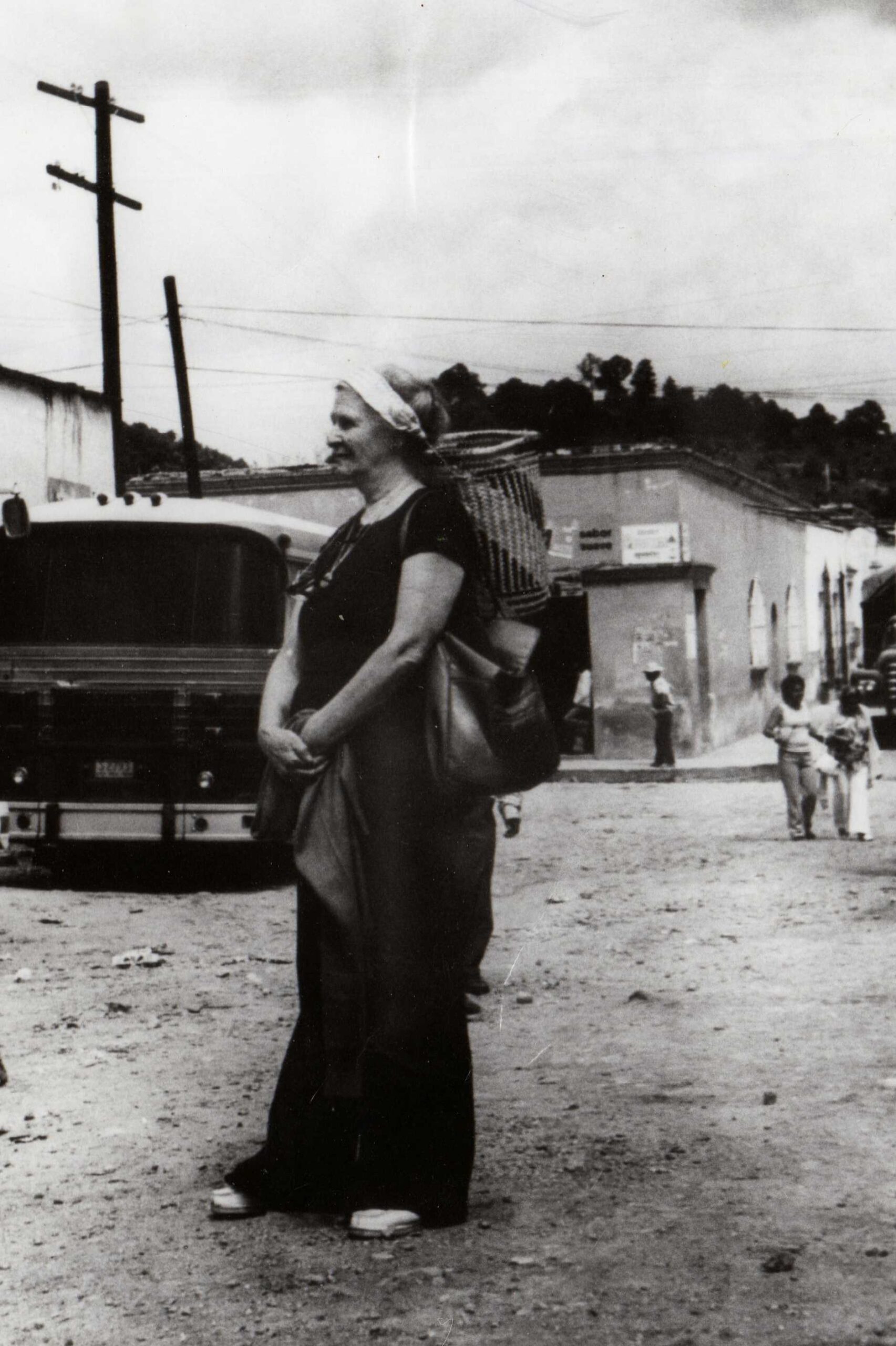
Freddie waiting for the bus in Tlaxiaco, Oaxaca, Mexico, 1980, Barbara Martin collection.
From the fall of 2024 to the summer of 2025, Martin’s personal notes—both from her time in Spain during the war and from her visit in 1972—guided me through dozens of small Spanish towns and villages. My dissertation examines the gendered experiences of women from the United States who served with the American Medical Bureau to Aid Spanish Democracy (AMB) during the war. About 70 women, most of them graduate nurses, went to Spain with the AMB between 1937 and 1938, spread across more than 50 hospital sites. During the year I spent in Spain visiting all the former hospital sites where the AMB women worked, my task was, in a way, to follow in Fredericka Martin’s footsteps during both her trips to Spain—in the 1930s and the 1970s—and continue the investigation she had started. Initially, I had hoped to consult local archives, but I quickly learned that many of the hospital records were lost by Francoist forces during or immediately after the war. So, instead, most of my research involved finding the buildings, if they still existed, and noting the surroundings. For further details, I had to rely on Martin’s extensive correspondence.
The Fredericka Martin Collection is a massive archive housed in the Tamiment Library at New York University: over 50 boxes containing thousands of pages of letters, drafts, notes, and other memorabilia documenting Martin’s experience and research on the AMB and the war. Martin was part of the first AMB group to enter Spain, in late January 1937. As chief nurse, she led her team to support soldiers during the Battle of Jarama at their schoolhouse-turned-hospital in El Romeral. Next, she worked at two or three of the four hospitals in Tarancón before transferring to Villa Paz and Castillejo near Saelices. In February 1938, she returned to the United States and spoke publicly on behalf of the AMB and Republican forces. After the war, she moved to Alaska, where she continued working in hospitals, but eventually switched careers to become an author. After writing several books about her time in Alaska, she moved to Mexico in the 1950s and began working on a book about the AMB and other international medical volunteers. It was a massive project that would occupy her for the rest of her life.
The correspondence that Martin—fondly known as “Freddie”—maintained with dozens of the former volunteers in the course of her years-long research is remarkable. Many of them returned her greetings warmly and were happy to help by staying in touch, answering questions, and even sending Christmas cards for years after the initial contact. At one point, she told a friend that she was “carrying on as steadily as possible a correspondence with one or more veterans of Spain or Spanish refugees in 22 countries.” Martin’s letters rekindled friendships and awakened recollections of the war, an experience none of her correspondents forgot or seemed to regret.
For my trip to Spain, I consulted two boxes containing files on roughly 80 former hospital sites. In addition to the hospitals where the American volunteers worked, Martin had also gathered material on other installations, including the English hospital at Grañén and the Swedish-Norwegian hospital at Alcoy. I was surprised to learn how much interaction there had been among the other international medical staff and how often they were shuffled around “like cards,” as one doctor recalled. Although the Americans arrived within their own units, they were under the jurisdiction of the International Brigades. This meant that doctors and nurses were often sent to hospital locations throughout Republican territory in response to the battle action. Most nurses worked in at least three or four hospitals, but some in as many as fifteen.
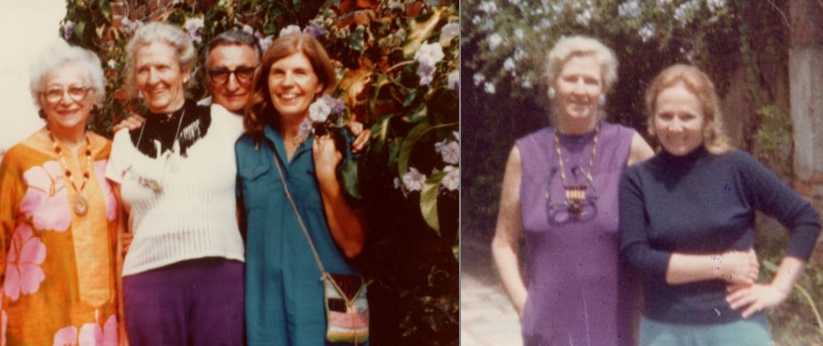
Freddie (second from left) with friends on her 79th Birthday in 1984, and Freddie with daughter Tobyanne in 1979, Barbara Martin Collection.
As I visited the sites, from cities like Albacete and Valencia to tiny mountain towns in Teruel province, I wondered how in the world ambulance drivers carrying crucial supplies along old roads with limited signage had managed. When I finally found the Romeral schoolhouse—the first hospital Martin and the AMB volunteers set up, I sat on the bench in front of the school and heard Freddie’s voice in my head, narrating her time at the hospital, the patients, and their daily schedule.
During one of my last visits to the Tamiment before my trip, I came across a memorandum Martin wrote to her former fellow volunteers on December 18, 1979, titled “A Plea in a Minor Key,” in which she asked them to share their memories with her. “If you do as I now ask,” she wrote, “I predict people will listen to your voices and think of you with love, regret they didn’t know you, perhaps name a child after one of you.” (Fredericka herself named her daughter Tobyanne, after fellow nurses Toby Jensky and Anne Taft.)
Although Martin did not finish her manuscript, her work and documentation remain a crucial contribution to our understanding of American women in the Spanish Civil War today. By following in Martin’s footsteps, I hope to continue her life’s work and share the voices of the AMB volunteers for generations to come.
Gina Benavidez is a PhD Candidate at the University of New Mexico, where she is working on her dissertation about the American women volunteers in the Spanish Civil War.






